
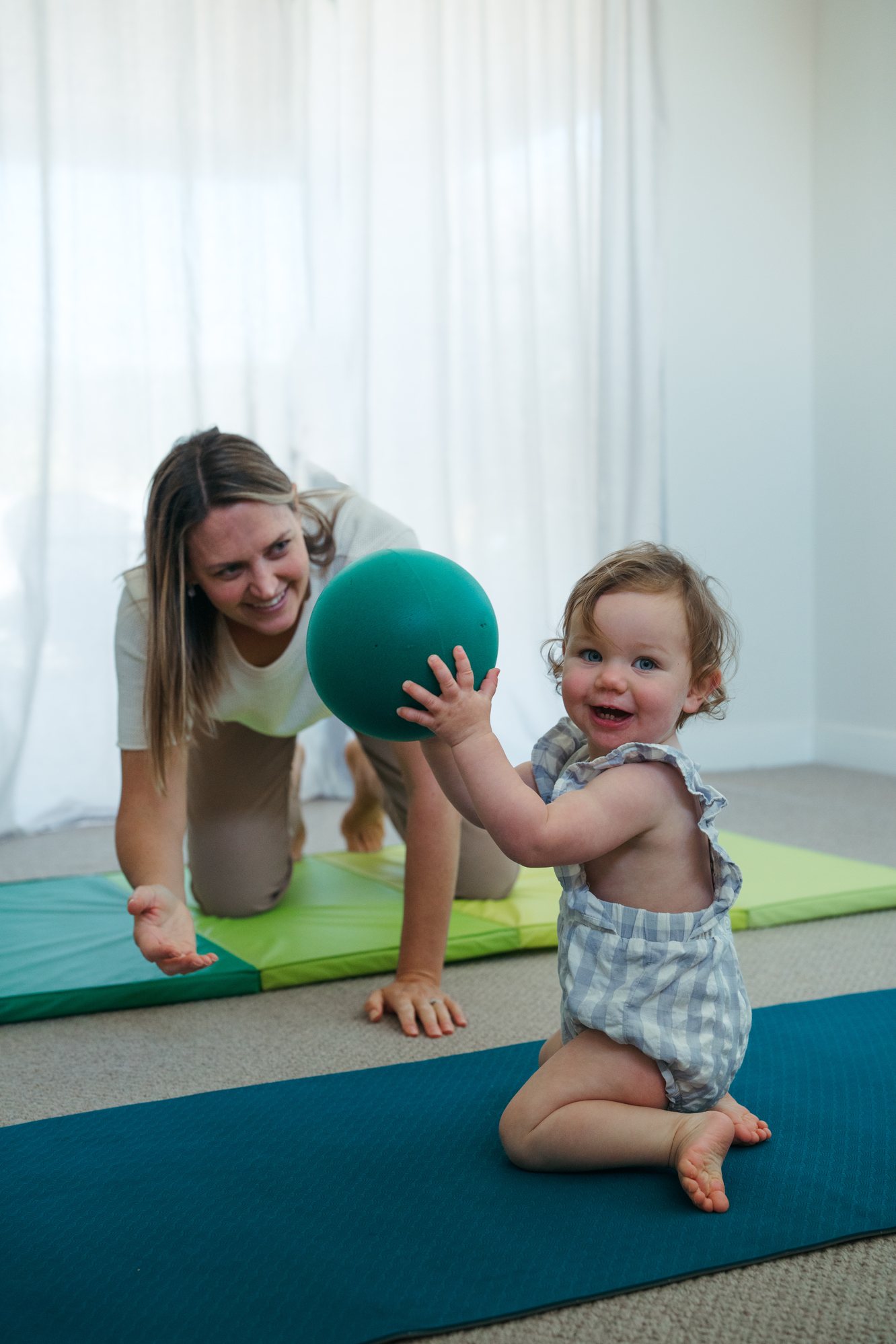
Play is how young children learn. For little ones, the process is far more important than the product: the exploring, the mess and the trying matter more than what they make at the end.
I’m Michele, a Primitive Reflex Integration Practitioner and Brain Gym® Consultant in Perth, a qualified primary school teacher and a mum of three. Here is why play matters so much in the early years, and some simple ways to make the most of it at home.
Key takeaways
- Play is how young children learn: the process matters more than the product.
- Movement play builds postural control, coordination, balance and body awareness.
- Naming feelings and singing instructions are simple ways to help through the day.
What is happening in the brain in the early years
The brain has two sides. The right side is the creative, imaginative side, where empathy and intuition are favoured. The left side looks after language, numeracy, literacy, analysis, logic, planning and time.
The two sides also develop at different times. Between 0 and 3 years, the right side is the lead, or dominant, side. Then from 3 to 6 years, the left side goes through a significant growth period, as described in this child development text on brain development.
Young children often do what feels good right there and then, and cannot always explain why. Movement plays an important role too, in developing postural control, coordination, balance and body awareness. Having integrated reflexes is the first step in a child’s overall development.
- Play, learning and school
- Postural control, coordination, balance and body awarenessbuilt through movement
- Integrated reflexesthe first step
Learning through play: why the process matters more than the product
1
Give them lots of play
2
Allow time to explore
3
Don’t focus on outcomes or long-term consequences
Movement play that builds the foundations
These are simple things to try at home:
1
Crawling games: tunnels, obstacle courses and chasing on hands and knees
2
Animal walks such as bear walks and crab walks
3
Plenty of time at the playground: climbing, swinging, hanging and balancing
4
Play that builds hand strength: playdough, pegs, tongs, threading and building blocks
5
Lying on the tummy to read, draw or do puzzles
6
Balance play: stepping stones, low beams and one-leg games
For older children doing homework, movement breaks work on the same idea.

Exercises from my sessions to keep going at home
Some of the exercises we practise together in my sessions are easy to keep going at home:
1
Cross crawl, or lizard crawl
2
Lazy 8 eye exercises
3
Calming, rhythmic movements at bedtime
Name their feelings
Label and acknowledge your child’s feelings. Giving them the words builds pathways for the left side of the brain, the side that looks after language.
Sing it to them
Words are processed in the left side of the brain, while tune and melody are processed in the right. A rewarding time to use this is during routine activities. If you have asked them to put their shoes on two or three times and they are not listening, sing it to them. It helps them tune in, and it brings more joy to the moment for you too.

“If you’ve asked them to put their shoes on 2 or 3 times and they’re not listening, sing it to them.”
Michele Henrick, Embody Family Wellness
Signs it is worth a closer look
Finding it hard to sit on the mat, or slumping and wriggling at a table
W sitting, or tiring quickly when sitting
A very tight or awkward pencil grip, or avoiding drawing and colouring
Poor balance, tripping or seeming clumsy
Being easily overwhelmed by noise or busy places
Seeing one or two of these does not mean something is wrong, and children develop at different rates. If several sound familiar, my school readiness and movement page explains what to look for, and an assessment can show whether retained primitive reflexes are part of the picture.
I work with babies from birth (preventative exercises up to 2.5 years) and children from 2.5 to 15 years. Parents usually come to me once their child has started full-time school, as that is when the struggles become more apparent, but before 5 is ideal because it is more preventative and prepares children for school. You are welcome to get in touch for a free phone chat about what you are noticing in your child.
Is there research behind it? Yes. Primitive reflex integration exercises are researched for their effect on childhood motor and neurological patterns. See the research.

Not sure where to start?
You are welcome to get in touch for a free phone chat about what you are noticing in your child.

