
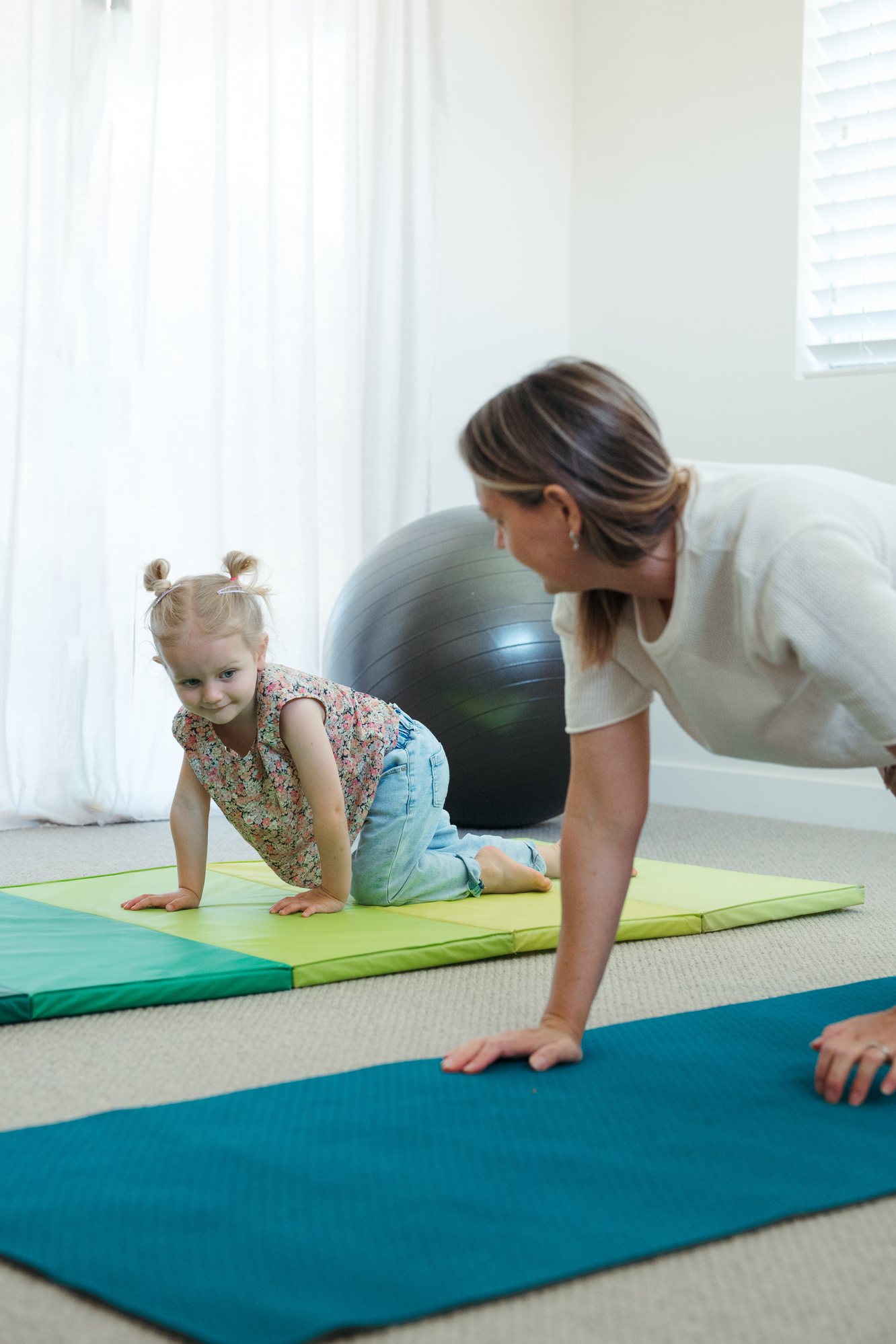
Animal walks are simple movement games where a child moves like an animal: a bear, a crab, a frog. They need no equipment, they use the whole body, and they help build the shoulder and core stability the hands rely on.
I’m Michele, a Primitive Reflex Integration Practitioner in Perth and a qualified primary school teacher. Here are eight fun animal walks to try. They are good to use for home play.
Key takeaways
- Animal walks need no equipment and use the whole body.
- They use both sides of the body together and help build the shoulder and core stability the hands rely on.
- Keep them short and playful: a few minutes at a time is plenty.
8 animal walks to try
1
Bear walk
Hands and feet on the floor, bottom up in the air, and walk forwards.
2
Crab walk
Sit on the floor, put the hands behind, lift the bottom and walk backwards or sideways.
3
Frog jumps
Squat down with hands on the floor, then jump forwards and land back in a squat.
4
Bunny hops
Feet together, small hops forwards. Try hopping along a line on the floor.
5
Snake slither
Lie on the tummy and wriggle forwards using the arms and legs.
6
Inchworm
From standing, walk the hands out along the floor, then walk the feet in to meet them.
7
Penguin walk
Walk on the heels with the toes lifted off the floor.
8
Flamingo
Stand on one leg and count how long you can balance. Then swap legs.

Why animal walks are good for children
- They use the whole body
- They use both sides of the body together
- Along with crawling games and climbing, they build the shoulder and core stability the hands rely on
- 1Whole bodycrawling, climbing, animal walks
- 2Core and shouldersa steady base
- 3Armsreaching and pushing
- 4Hands and fingersholding, cutting, writing
Tips for making them fun
- Turn them into a game: races down the hallway, follow the leader, or an obstacle course
- Keep it short. A few minutes at a time is plenty
- Go barefoot, and try different surfaces: grass, sand, carpet
- Keep it playful, and stop if anything hurts

When to look a little further
Children all move differently, and some of these will be harder than others. If your child finds most of them very hard, and you are also noticing things like poor balance, toe walking, W sitting or messy handwriting, it can be worth looking at whether retained primitive reflexes are part of the picture.
You can read how I work on my services page, or get in touch for a free phone chat about what you are noticing in your child.
What parents say
★★★★★ 5.0 from 3 Google reviews.
★★★★★
“We visited Michele for our 4yo little girl who struggled to stay on task, sit still, lacked coordination and struggled with separation. … By week 3 we had visitors comment on the changes to our household. By week 12 we had a completely different little girl, shes relaxed. She still has her beautiful spark, amazing imagination and sense of humour, life is just slower now.”
Sarah Anderson, Google review
★★★★★
“From the very first session, she created such a calm, supportive, and understanding space … The strategies and tools we’ve learned have made a real impact on his ability to regulate, connect, and thrive both at home and school.”
Natasha Weir, Google review
★★★★★
“Michele identified some unintegrated reflexes and gave us some simple, easy to do at home exercises … From the first session we saw less reactivity; and from consistently doing the exercises at home my daughter can now remain calm in situations that would previously have caused a lot of distress.”
Analise Mongan, Google review
Not sure where to start?
You are welcome to get in touch for a free phone chat about what you are noticing in your child.

