Author: Michele Henrick

  • Rhythmic Movement for Kids: Why I End Each Session With It

    Rhythmic Movement for Kids: Why I End Each Session With It

    Rhythmic movement is an important part of my approach to supporting children’s neurological development, primitive reflex integration and nervous system regulation.

    Throughout our sessions, children participate in a variety of purposeful movements and activities designed to develop coordination, balance, body awareness and motor control. Towards the end of each session, I incorporate gentle rhythmic movements to help their bodies slow down and transition into a calmer state.

    Key takeaways

    • Rhythmic movements involve gentle, repetitive and patterned movements of the body.
    • Towards the end of each session, I incorporate gentle rhythmic movements to help their bodies slow down and transition into a calmer state.
    • Rhythmic movement is also used in some primitive reflex integration approaches.
    • Every child is different, so I adjust the movements to suit their individual needs and responses.

    How does rhythmic movement work?

    Rhythmic movements involve gentle, repetitive and patterned movements of the body. These movements provide the brain with consistent sensory feedback, helping children develop body awareness and supporting the communication between the brain and body.

    Rhythmic movement is also used in some primitive reflex integration approaches. Primitive reflexes are automatic movement patterns that emerge during early development and typically become inhibited as the brain and nervous system mature.

    When these reflexes remain active beyond their expected developmental period, they may be associated with difficulties in areas such as posture, coordination, balance and motor control.

    Gentle, repetitive movements can be incorporated into a broader programme of reflex-focused activities to support neurological development and more controlled movement patterns.

    Michele and a baby on a balance board
    Balance work on the board in one of my sessions.

    Why I use rhythmic movement at the end of a session

    Many of the activities children participate in during a session involve concentration, physical effort, coordination and sensory processing.

    I finish sessions with rhythmic movements because I want children to leave feeling calm, settled and organised.

    The repetitive nature of these movements provides a predictable sensory experience that can help children:

    • Slow down after physical activity.
    • Develop greater awareness of their body.
    • Support relaxation and nervous system regulation.
    • Transition from an active state into a calmer state.
    • Experience gentle, controlled movement.

    Every child is different, so I adjust the movements to suit their individual needs and responses.

    Michele Henrick, Brain Gym® Consultant in Perth

    “I finish sessions with rhythmic movements because I want children to leave feeling calm, settled and organised.”

    Michele Henrick, Embody Family Wellness

    A calm ending to support development

    I believe that supporting children’s development involves more than simply teaching them new movement skills. It is also about helping them understand their bodies, develop control over their movements and recognise when they need to slow down.

    By incorporating rhythmic movements into the end of each session, I provide children with an opportunity to finish on a calm and positive note while continuing to support their movement and sensory development.

    You can see how sessions with me run on my services page.

    What parents say

    ★★★★★ 5.0 from 3 Google reviews.

    ★★★★★

    “Michele identified some unintegrated reflexes and gave us some simple, easy to do at home exercises … From the first session we saw less reactivity; and from consistently doing the exercises at home my daughter can now remain calm in situations that would previously have caused a lot of distress.”

    Analise Mongan, Google review

    Not sure where to start?

    You are welcome to get in touch for a free phone chat about what you are noticing in your child.

  • How Long Does Primitive Reflex Integration Take? What Happens in the First Session

    How Long Does Primitive Reflex Integration Take? What Happens in the First Session

    Primitive reflex integration with me in Perth starts with an initial appointment of 60 to 90 minutes, then weekly sessions of 45 to 60 minutes. Positive results are usually seen after 5 or 6 weeks, and faster when the exercises are practised at home.

    I’m Michele, a Primitive Reflex Integration Practitioner and Brain Gym® Consultant in Perth, and a qualified primary school teacher. This post walks through what happens in the first session and what the weeks after it look like. You can see the full details and prices on my services page.

    Key takeaways

    • The initial appointment takes 60 to 90 minutes and is all about getting to know your child.
    • Weekly sessions run for 45 to 60 minutes, with “home play” in between.
    • There is a 5 week check on progress and a re-assessment of the reflexes.
    • Positive results are usually seen after 5 or 6 weeks, and faster with practice at home.

    What happens in the first session

    Our first session is all about getting to know your child, discovering their strengths and interests, and understanding your family’s goals. I want your child to feel comfortable, confident and supported as we begin our journey together.

    Through gentle, age-appropriate activities, I observe your child’s movement patterns, coordination and primitive reflexes. I also look at their dominant hand, foot and eye to better understand how their brain and body work together to support movement, coordination and learning.

    This initial session helps me build a clearer picture of your child’s individual needs and develop a personalised approach to support their development and help them reach their potential.

    In the initial appointment, which takes 60 to 90 minutes, I assess brain and body organisation, side dominance and which primitive reflexes need further integration. From there we build an individual plan together.

    Michele Henrick, Brain Gym® Consultant in Perth

    “I want your child to feel comfortable, confident and supported as we begin our journey together.”

    Michele Henrick, Embody Family Wellness

    Michele supporting a child over an exercise ball during a movement session
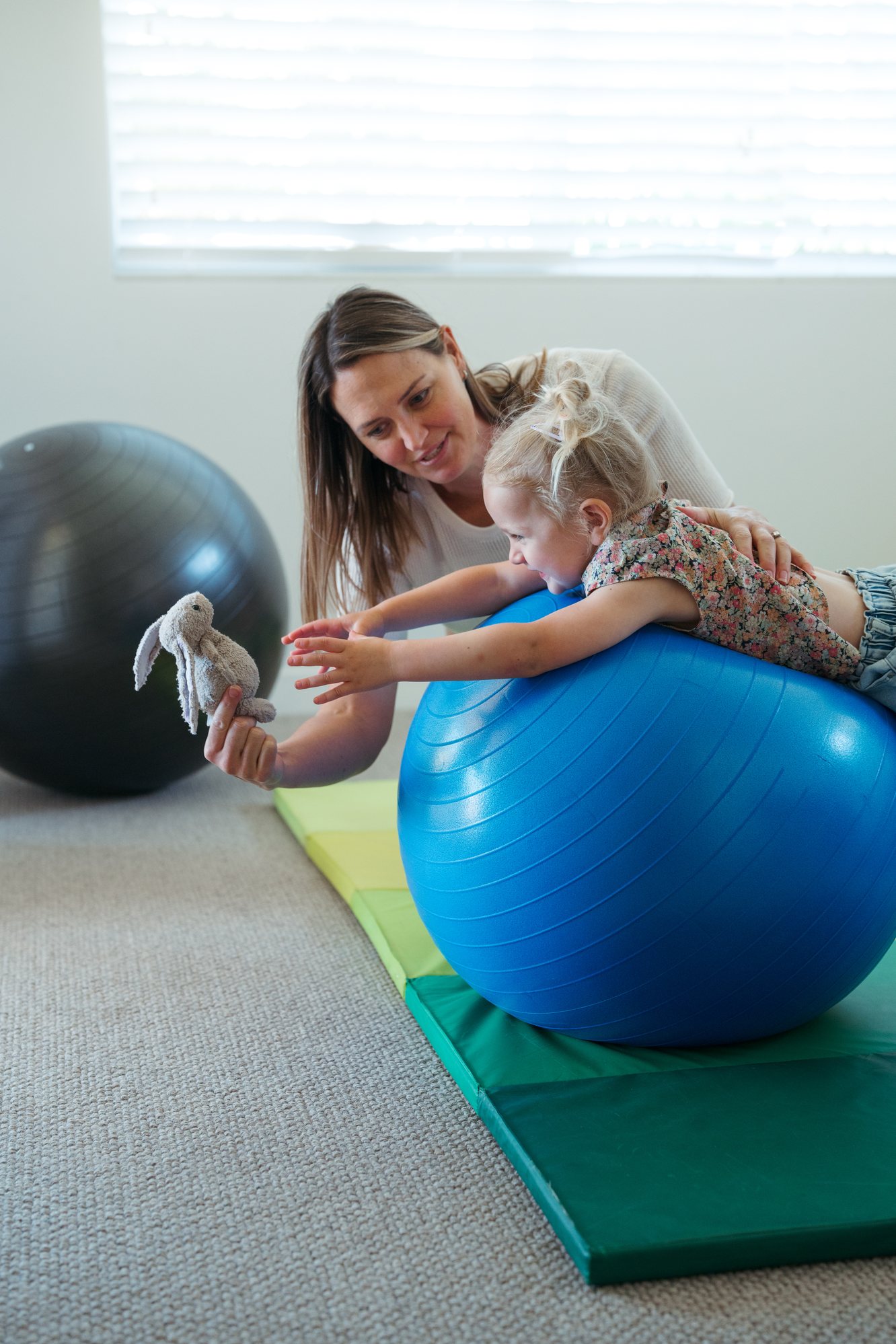
    Movement and play in one of my sessions.

    What the weeks after look like

    1

    Weekly sessions, 45 to 60 minutes. Movement and play, with “home play” in between to strengthen the new connections.

    2

    A 5 week check on progress and a re-assessment of the reflexes.

    3

    Fortnightly or monthly sessions after that if they are needed.

    1. 1Free phone chatoptional
    2. 2Initial appointment60 to 90 minutes
    3. 3Weekly sessions45 to 60 minutes, plus home play
    4. 45 week checkprogress and re-assessment
    5. 5Fortnightly or monthlyif needed
    How sessions with me usually run, from the free phone chat to the 5 week check.

    How long does primitive reflex integration take?

    Positive results are usually seen after 5 or 6 weeks, and faster when the exercises are practised at home. The 5 week check is where I re-assess the reflexes and look at progress with you.

    Children usually see me for 6 to 8 weeks on average, depending on what we are working on. Children with a diagnosis, where we are working on more complex symptoms, are looking at around 10 to 12 weeks.

    Why home play matters

    Sessions are movement and play, and the “home play” in between is what strengthens the new connections. Practising the exercises at home between sessions helps the new pathways strengthen faster.

    If you would like a feel for this kind of movement at home, my posts on animal walks and movement breaks are a good place to start.

    Michele and a baby on a balance board
    Balance work on the board in a session.

    Face to face or online

    I offer face to face appointments in my home office in Perth, which creates a safe and comfortable environment, and online appointments.

    Before you book

    Not sure if it is right for your child? Start with a free phone chat about what you are noticing.

    If you have concerns about your child’s development, check in with your GP or paediatrician too. My work is movement based and sits alongside other support, not instead of it.

    Common questions

    How long is the first session?

    The initial appointment takes 60 to 90 minutes.

    How long are the weekly sessions?

    Weekly sessions run for 45 to 60 minutes.

    When will we see a difference?

    Positive results are usually seen after 5 or 6 weeks. Practising the exercises at home between sessions helps the new pathways strengthen faster.

    What ages do you work with?

    Children from 2.5 to 15 years, and preventative exercises for babies from birth up to 2.5 years.

    Do you see children face to face or online?

    Both. I see children face to face in my home office in Perth, and I also offer online appointments.

    What parents say

    ★★★★★ 5.0 from 3 Google reviews.

    ★★★★★

    “Michele identified some unintegrated reflexes and gave us some simple, easy to do at home exercises … From the first session we saw less reactivity; and from consistently doing the exercises at home my daughter can now remain calm in situations that would previously have caused a lot of distress.”

    Analise Mongan, Google review

    Not sure where to start?

    You are welcome to get in touch for a free phone chat about what you are noticing in your child.

  • Newborn Reflexes: What They Do and When They Usually Fade

    Newborn Reflexes: What They Do and When They Usually Fade

    Newborn reflexes are the automatic movements babies are born with. They help a baby move through birth, feed, grasp and begin to move, and as the brain matures most of them are meant to integrate, or fade, by around 4 to 6 months.

    I’m Michele, a Primitive Reflex Integration Practitioner and Brain Gym® Consultant in Perth. This post explains the main newborn reflexes, what each one does and when it usually fades. Each reflex has its own page if you would like more detail, and my primitive reflexes page explains them all together.

    Key takeaways

    • Newborn reflexes are automatic movements controlled by the brainstem.
    • They help a baby move through birth, feed, grasp and begin to move.
    • Most are meant to integrate by around 4 to 6 months; a few take longer.
    • Your baby’s doctor or midwife checks reflexes at newborn health checks.

    What are newborn reflexes?

    Primitive reflexes are involuntary, automatic responses that develop in the womb and the newborn period. They are controlled by the brainstem, so there is no conscious thought involved. They exist for survival and development in the early months: they help a baby move through birth, feed, grasp and begin to move.

    Your baby’s doctor or midwife checks reflexes like these during standard newborn health checks (Pregnancy, Birth and Baby).

    Michele and a young child doing hand activities on a rug
    Hand activities in one of my sessions.

    The newborn reflexes and what they do

    Rooting reflex

    When the side of a baby’s mouth is touched, they turn their head and open their mouth. It helps them find the breast and start feeding (Pregnancy, Birth and Baby).

    Sucking reflex

    Babies are born able to suck, so they can drink milk from the breast or a bottle (Pregnancy, Birth and Baby).

    Moro reflex (startle reflex)

    When a newborn baby is startled, for example by a loud noise or the feeling of falling, their arms fling out wide, then come back in towards the body, often with a cry. It is the body’s first alarm system. It usually integrates by around 4 to 6 months. More on the Moro reflex.

    Palmar grasp reflex

    Stroke the palm of a baby’s hand and their fingers close in a grasp. It is the very start of learning to hold things. It usually integrates in the first six months, so the hand can open, reach and let go on purpose. More on the palmar reflex.

    ATNR (the “fencing” reflex)

    When a baby turns their head to one side, the arm and leg on that side straighten, and the arm and leg on the other side bend. It helps a baby begin to connect what their eyes see with what their hands do. It usually integrates by around 4 to 6 months. More on the ATNR.

    Spinal galant reflex

    When a baby is lying on their tummy and the skin along one side of the spine is stroked, their hips move towards the touch. It develops before birth and is thought to help with movement during birth. It usually integrates in the first year of life. More on the spinal galant reflex.

    Tonic labyrinthine reflex (TLR)

    Driven by the balance system in the inner ear. When a baby’s head tips forward, the arms and legs curl in. When the head tips back, the body stretches out. The forward version usually fades in the first few months of life, and the backward version more gradually over the first few years. More on the TLR.

    STNR (symmetrical tonic neck reflex)

    This one appears later, at around 4 to 6 months. When a baby on their hands and knees lifts their head, their arms straighten and their legs bend. It helps a baby push up off the floor and into a crawling position, and it is usually integrated by around 9 to 11 months, once a baby is crawling well. More on the STNR.

    When do newborn reflexes usually fade?

    As the brain matures, these reflexes are meant to integrate in sequence, making way for the more mature, controlled movements we use for the rest of our lives. The timings below are the usual ranges, and every baby is different.

    1. First few monthsForward TLR
    2. Around 4 to 6 monthsMoro reflex
      ATNR
      Palmar grasp (first six months)
    3. Around 9 to 11 monthsSTNR, once crawling well
    4. First yearSpinal galant reflex
    5. First few yearsBackward TLR
    When each reflex usually integrates. Every baby is different.Source: the reflex pages on this site (Moro, palmar, ATNR, STNR, TLR, spinal galant)

    What if a reflex does not fade?

    Under stress, that sequence can be interrupted and a reflex can be “retained”. Possible reasons include birth method (for example caesarean compared with vaginal delivery), trauma, illness, exposure to toxins, anaesthetics and medications. None of these automatically causes a retained reflex, but they are possible contributors.

    When a reflex is retained, the body keeps reacting automatically in situations where a child needs calm, controlled movement, and that can make everyday things like sitting still, writing or catching a ball harder than they should be. My primitive reflexes page lists the signs to look for.

    Movement for babies

    I work with babies from birth (preventative exercises up to 2.5 years) and children from 2.5 to 15 years. Parents usually come to me once their child has started full-time school, as that is when the struggles become more apparent, but before 5 is ideal because it is more preventative. You can see how sessions run on my services page.

    If you have any concerns about your baby’s reflexes or development, talk to your GP, child health nurse or paediatrician. My work is movement based and sits alongside other support, not instead of it.

    Michele and a baby on a balance board
    Balance work with a baby in one of my sessions.

    Common questions

    What are the main newborn reflexes?

    Rooting, sucking, the Moro (startle) reflex, the palmar grasp reflex, the ATNR, the spinal galant reflex and the tonic labyrinthine reflex (TLR). The STNR appears a little later, at around 4 to 6 months.

    When do newborn reflexes go away?

    Most are meant to integrate by around 4 to 6 months. The spinal galant reflex usually integrates in the first year, the STNR by around 9 to 11 months, and the backward TLR more gradually over the first few years.

    Who checks a newborn’s reflexes?

    Your baby’s doctor or midwife checks them during standard newborn health checks.

    What ages do you work with?

    Children from 2.5 to 15 years, and preventative exercises for babies from birth up to 2.5 years.

    What parents say

    ★★★★★ 5.0 from 3 Google reviews.

    ★★★★★

    “Michele identified some unintegrated reflexes and gave us some simple, easy to do at home exercises … From the first session we saw less reactivity; and from consistently doing the exercises at home my daughter can now remain calm in situations that would previously have caused a lot of distress.”

    Analise Mongan, Google review

    Not sure where to start?

    You are welcome to get in touch for a free phone chat about what you are noticing in your child.

  • Fine Motor Skills Activities for Kids: Simple Ideas to Try at Home

    Fine Motor Skills Activities for Kids: Simple Ideas to Try at Home

    Fine motor skills are the small, controlled movements of the hands and fingers: holding a pencil, using scissors, doing up buttons, using cutlery. They depend on a lot that happens further up the body, including posture, shoulder stability and how well the eyes and hands work together.

    I’m Michele, a Primitive Reflex Integration Practitioner and Brain Gym® Consultant in Perth. I am also a qualified primary school teacher, and I taught for 15 years before moving into this work. This post shares simple fine motor skills activities to try at home, and what can sit underneath when hand tasks are hard work. You can read more on my handwriting and fine motor skills page.

    Key takeaways

    • Fine motor skills are the small, controlled movements of the hands and fingers.
    • Big movements come first: crawling, animal walks and climbing build the shoulder and core stability the hands rely on.
    • Playdough, pegs, tongs, threading, building blocks and drawing on a vertical surface all build the hands.
    • Keep it playful and short, and check in with your GP or paediatrician if you have concerns.

    Big movements before small ones

    Crawling games, animal walks and climbing build the shoulder and core stability the hands rely on. So the best fine motor activities often start on the floor and at the playground, not at the table. My post on gross motor skills has more ideas for the big movements.

    1. 1Whole bodycrawling, climbing, animal walks
    2. 2Core and shouldersa steady base
    3. 3Armsreaching and pushing
    4. 4Hands and fingersholding, cutting, writing
    Big movements before small ones: whole-body play builds the shoulder and core stability the hands rely on.

    Fine motor skills activities to try at home

    1

    Build hand strength

    • Playdough, pegs, tongs, threading and building blocks

    2

    Use both hands together

    • Threading beads, cutting and pasting, and folding paper

    3

    Draw big, then small

    • Drawing big shapes on a vertical surface like a whiteboard, easel or window
    • Lying on the tummy to read, draw or do puzzles

    4

    Make it sensory

    • Write in sand, shaving cream or finger paint
    • Try different writing tools: coloured pencils, markers, crayons or even paint

    5

    Start with the whole body

    • Climbing, swinging and hanging at the playground
    • Crawling games and animal walks

    Keep it playful and short. More of the same practice rarely helps if the body is finding it hard.

    Michele and a young child sitting on mats in a movement session
    Sitting together on the mats in one of my sessions.

    Signs a child is finding fine motor skills hard

    A very tight or awkward pencil grip, and hands that tire quickly

    Messy handwriting, or letters that vary a lot in size

    Avoiding drawing, colouring or writing tasks

    Trouble with buttons, zips, shoelaces or cutlery

    Finding it hard to use both hands together for cutting, buttons or shoelaces

    Slumping at the desk, or propping the head up on a hand

    Seeing one or two of these does not mean something is wrong, and children develop at different rates.

    1. 2 yearsEats with a spoon
    2. 3 yearsStrings items together, like large beads or macaroni
      Uses a fork
    3. 4 yearsUnbuttons some buttons
      Holds crayon or pencil between fingers and thumb (not a fist)
    4. 5 yearsButtons some buttons
    Hand skills most children can do by each age. Children develop at different rates, and one missed milestone on its own is not a diagnosis.Source: CDC, Learn the Signs. Act Early. developmental milestones (accessed 27/10/2026). Milestones are things most children (75% or more) can do by that age.

    Why some children find fine motor skills hard

    There can be many reasons, and often more than one. In my work I often see fine motor and handwriting difficulties alongside retained primitive reflexes. The palmar reflex, the grasp reflex, can affect fine motor skills and pencil grip when it is retained. The ATNR can make handwriting and crossing the midline harder.

    Posture matters too. A child who finds it hard to sit upright at a desk, or who prefers W sitting on the floor, is using a lot of effort just to stay stable, which leaves less for the hands.

    Michele Henrick, Brain Gym® Consultant in Perth

    “As children grow, they need to develop the ability to open and close their hands independently, isolate finger movements and coordinate their hands for everyday tasks.”

    Michele Henrick, Embody Family Wellness

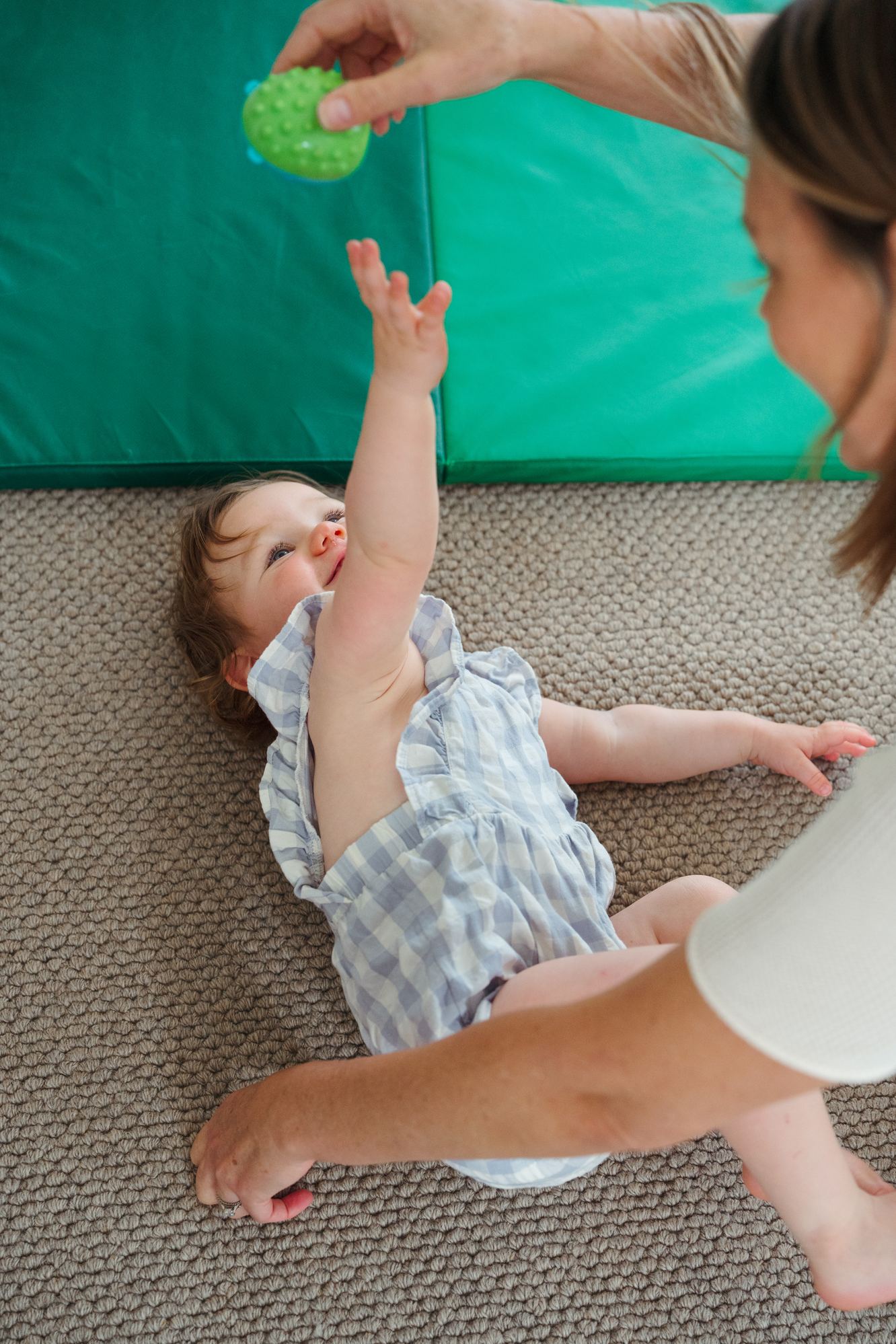
    A baby lying on a mat reaching up for a small ball
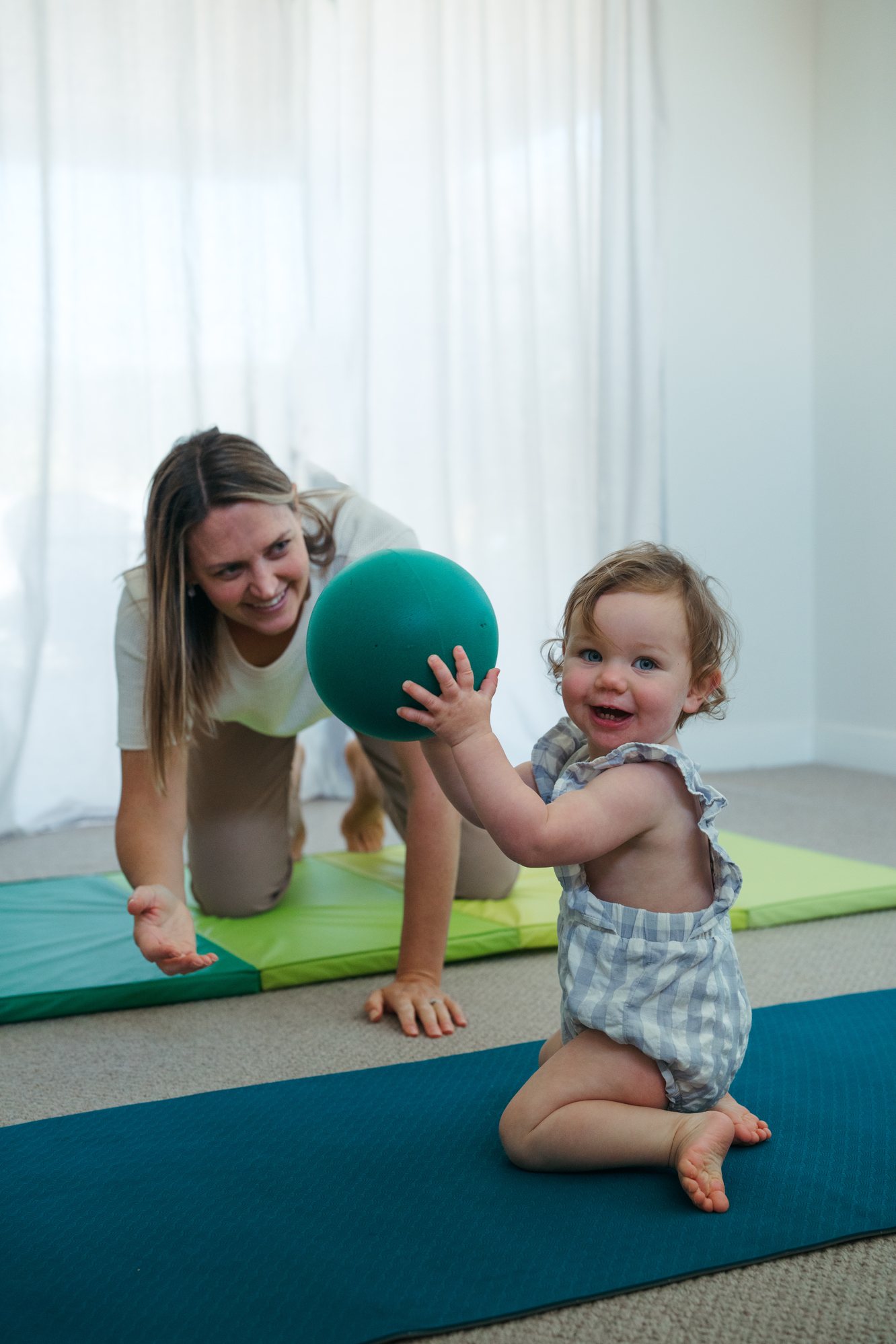
    Reaching for a small ball on the mat.

    When it is worth getting checked

    If fine motor tasks are holding your child back at school or causing real upset, talk to their teacher, and check in with your GP or paediatrician if you have concerns about their development. An assessment with me can show whether retained reflexes are part of the picture. My work is movement based and sits alongside other support, not instead of it.

    You can read how I work on my services page, or get in touch for a free phone chat about what you are noticing in your child.

    Common questions

    What are examples of fine motor skills?

    Holding a pencil, using scissors, doing up buttons and using cutlery, along with threading, building with blocks and doing puzzles.

    What is the difference between fine and gross motor skills?

    Gross motor skills are the big movements of the whole body, like crawling, running, climbing and balancing. Fine motor skills are the small, controlled movements of the hands and fingers. The two are linked: big movements build the shoulder and core stability the hands rely on.

    What age do you work with?

    Children from 2.5 to 15 years, and preventative exercises for babies from birth up to 2.5 years.

    Do you only see children in Perth?

    I see children face to face in my home office in Perth, and I also offer online appointments.

    What parents say

    ★★★★★ 5.0 from 3 Google reviews.

    ★★★★★

    “From the very first session, she created such a calm, supportive, and understanding space … The strategies and tools we’ve learned have made a real impact on his ability to regulate, connect, and thrive both at home and school.”

    Natasha Weir, Google review

    Not sure where to start?

    You are welcome to get in touch for a free phone chat about what you are noticing in your child.
  • Gross Motor Skills in Children: What They Are and Play Ideas to Build Them

    Gross Motor Skills in Children: What They Are and Play Ideas to Build Them

    Gross motor skills are the big movements that use the large muscles of the body: crawling, walking, running, jumping, climbing, balancing, throwing and catching. They rely on the brain and body communicating well, knowing where the body is in space, keeping it steady, and using both sides together.

    I’m Michele, a Primitive Reflex Integration Practitioner and Brain Gym® Consultant in Perth, and a qualified primary school teacher. This post explains what gross motor skills are, why they matter for school, and simple play ideas to build them at home.

    Key takeaways

    • Gross motor skills are the big, whole-body movements: crawling, running, jumping, climbing, balancing, throwing and catching.
    • Big movements come before small ones: they build the core and shoulder stability the hands rely on.
    • Playground time, crawling games, animal walks and balance play all help, short and often.
    • If falls or coordination get in the way of school and play, check in with your GP or paediatrician.

    Gross motor skills and fine motor skills

    Gross motor skills are the big movements of the whole body. Fine motor skills are the small, controlled movements of the hands and fingers, like holding a pencil, using scissors or doing up buttons. The two are linked: big movements before small ones, because crawling, climbing and animal walks build the shoulder and core stability the hands rely on.

    Gross motor skills
    • Crawling and walking
    • Running and jumping
    • Climbing and balancing
    • Throwing and catching
    Fine motor skills
    • Holding a pencil
    • Using scissors
    • Doing up buttons
    Gross motor skills are the big movements of the whole body; fine motor skills are the small, controlled movements of the hands and fingers.
    1. 1Whole bodycrawling, climbing, animal walks
    2. 2Core and shouldersa steady base
    3. 3Armsreaching and pushing
    4. 4Hands and fingersholding, cutting, writing
    Big movements before small ones: whole-body play builds the shoulder and core stability the hands rely on.

    Why gross motor skills matter for school

    Gross motor skills underpin a child’s ability to sit in a classroom, core muscle strength supports their endurance and focus, and fine motor skills let them hold a pencil and cut with scissors. You can read more on my school readiness page.

    Michele supporting a child over an exercise ball during a movement session
    Working on balance and core strength over an exercise ball in one of my sessions.

    Signs a child is finding gross motor skills hard

    Tripping, falling or bumping into furniture and other children

    Finding gross motor skills hard to learn, like riding a bike, skipping, hopping or catching a ball

    Avoiding sport, climbing or playground games

    Poor posture or low muscle tone, and tiring quickly

    Seeing one or two of these does not mean something is wrong, and children develop at different rates.

    1. 18 monthsWalks without holding on to anyone or anything
      Climbs on and off a couch or chair without help
    2. 2 yearsKicks a ball
      Runs
      Walks (not climbs) up a few stairs with or without help
    3. 4 yearsCatches a large ball most of the time
    4. 5 yearsHops on one foot
    Gross motor milestones most children reach by each age. Children develop at different rates, and one missed milestone on its own is not a diagnosis.Source: CDC, Learn the Signs. Act Early. developmental milestones (accessed 27/10/2026). Milestones are things most children (75% or more) can do by that age.

    Gross motor activities to try at home

    1

    Plenty of time at the playground: climbing, swinging, hanging and balancing

    2

    Crawling games: tunnels, obstacle courses and chasing on hands and knees

    3

    Animal walks such as bear walks, crab walks and frog jumps

    4

    Balance play: stepping stones, walking along a line or a low beam, or standing on one leg while brushing teeth

    5

    Ball games at an easy level, starting with a big, soft ball or a balloon

    6

    Swimming, and riding a scooter or balance bike

    Keep it fun and low pressure. Short and often works better than long practice sessions, and movement breaks through the day all add up.

    Michele rolling a ball with a toddler during a movement session
    Rolling a ball back and forth: an easy ball game to start with.

    Where primitive reflexes fit in

    In my work I often see balance and coordination difficulties alongside retained primitive reflexes, the automatic movements babies are born with. When a reflex has not fully integrated, the body keeps reacting automatically in situations where a child needs calm, controlled movement. You can read more on my coordination, balance and clumsiness page.

    When it is worth getting checked

    If your child is falling a lot, has lost skills they used to have, or their coordination is getting in the way of school and play, please check in with your GP or paediatrician. My work is movement based and sits alongside medical care, not instead of it.

    You can read how I work on my services page, or get in touch for a free phone chat about what you are noticing in your child.

    Michele Henrick, Brain Gym® Consultant in Perth

    “Working with children before 5 is ideal because it is more preventative and prepares children for full-time school.”

    Michele Henrick, Embody Family Wellness

    Common questions

    What are examples of gross motor skills?

    Crawling, walking, running, jumping, hopping, skipping, climbing, balancing, throwing, catching and riding a bike or scooter.

    What age do you work with?

    Children of all ages from 2.5 years, and preventative exercises for babies from birth up to 2.5 years.

    Can my child see you alongside other professionals?

    Yes. My work is movement based and looks at the whole brain and body connection, and many families see me alongside other professionals.

    What parents say

    ★★★★★ 5.0 from 3 Google reviews.

    ★★★★★

    “We visited Michele for our 4yo little girl who struggled to stay on task, sit still, lacked coordination and struggled with separation. … By week 3 we had visitors comment on the changes to our household. By week 12 we had a completely different little girl, shes relaxed. She still has her beautiful spark, amazing imagination and sense of humour, life is just slower now.”

    Sarah Anderson, Google review

    Not sure where to start?

    You are welcome to get in touch for a free phone chat about what you are noticing in your child.

  • Pencil Grip for Kids: What Helps and When to Get It Checked

    Pencil Grip for Kids: What Helps and When to Get It Checked

    Pencil grip is how a child holds a pencil to draw and write. A comfortable grip lets the hand move freely without tiring, and it depends on much more than the fingers: hand strength, posture and shoulder stability all play a part.

    I’m Michele, a Primitive Reflex Integration Practitioner and Brain Gym® Consultant in Perth. I am also a qualified primary school teacher, and I taught for 15 years before moving into this work. Pencil grip is one of the things parents mention to me most, often alongside handwriting and fine motor skills.

    Key takeaways

    • Pencil grip depends on hand strength, posture and shoulder stability, not just the fingers.
    • Grip usually moves from a whole fist down towards the fingertips, to a tripod grip.
    • A relaxed grip that does not tire the hand matters more than a perfect one.
    • Build the hands and shoulders first, and keep writing practice short and positive.

    How pencil grip usually develops

    Most children start by holding a crayon in a whole fist, with the arm doing the work. As the shoulder, hand and fingers get stronger, the grip moves down towards the fingertips, until the pencil rests between the thumb and the first two fingers (often called a tripod grip) and the small finger movements do the writing.

    Children develop at different rates, and many write comfortably with a grip that is a little different. What matters most is that the grip is relaxed, the hand does not tire quickly, and writing is not a struggle.

    How pencil grip usually develops: whole fist, moving to the fingers, tripod gripWhole fistMoving tothe fingersTripod grip
    How pencil grip usually develops: from a whole fist, down towards the fingertips, to a tripod grip. Children develop at different rates.

    Signs a pencil grip is making writing hard work

    A very tight or awkward pencil grip, and hands that tire quickly

    Messy handwriting, or letters that vary a lot in size

    Avoiding drawing, colouring or writing tasks

    Slumping at the desk, or propping the head up on a hand

    Trouble with buttons, zips, shoelaces or cutlery

    Seeing one or two of these does not mean something is wrong, and there can be many reasons for them.

    1. 18 monthsScribbles
    2. 4 yearsHolds crayon or pencil between fingers and thumb (not a fist)
    3. 5 yearsButtons some buttons
    Hand skills most children can do by each age. Children develop at different rates, and one missed milestone on its own is not a diagnosis.Source: CDC, Learn the Signs. Act Early. developmental milestones (accessed 27/10/2026). Milestones are things most children (75% or more) can do by that age.

    Why some children find pencil grip hard

    A pencil grip depends on more than the fingers. In my work I often see a retained palmar reflex, the grasp reflex, alongside a tight grip. As children grow, they need to develop the ability to open and close their hands independently, isolate finger movements and coordinate their hands for everyday tasks.

    Posture matters too. A child who finds it hard to sit upright at a desk, or who prefers W sitting on the floor, is using a lot of effort just to stay stable, which leaves less for the hands. The ATNR can also make handwriting and crossing the midline harder.

    Michele Henrick, Brain Gym® Consultant in Perth

    “Through my work, I look beyond the pencil grip to understand the underlying skills that may be making writing difficult.”

    Michele Henrick, Embody Family Wellness

    Michele and a young child doing hand activities on a rug
    Hand play on the floor in one of my sessions.

    Things to try at home

    Build the hands and shoulders first

    • Play that builds hand strength: playdough, pegs, tongs, threading and building blocks
    • Big movements before small ones: crawling games, animal walks and climbing build the shoulder and core stability the hands rely on
    • Drawing on a vertical surface like a whiteboard, easel or window
    • Lying on the tummy to read or draw

    Make writing fun

    • Turn it into a game: handwriting scavenger hunts or letter-tracing races
    • Use different writing tools: coloured pencils, markers, crayons or even paint
    • Write in sand, shaving cream or finger paint to add a sensory element
    • Write short stories together, taking turns to write a sentence

    Keep writing practice short and positive. More of the same practice rarely helps if the body is finding it hard.

    When pencil grip is worth getting checked

    If handwriting is holding your child back at school or causing real upset, talk to their teacher, and check in with your GP or paediatrician if you have concerns about their development. An assessment with me can show whether retained primitive reflexes are part of the picture. My work is movement based and sits alongside other support, not instead of it.

    You can read how I work on my services page, or get in touch for a free phone chat about what you are noticing in your child.

    Common questions

    Should I correct my child’s pencil grip?

    Gentle reminders are fine, but if the grip is tight or awkward it usually helps more to build hand strength, posture and shoulder stability first. Play that builds hand strength, drawing on a vertical surface and lying on the tummy to draw all help.

    Will more handwriting practice fix a tight grip?

    Practice helps when the body is ready for it. If posture, hand strength or a retained reflex is making writing hard work, it usually helps more to work on those first.

    Do you only see children in Perth?

    I see children face to face in my home office in Perth, and I also offer online appointments.

    What parents say

    ★★★★★ 5.0 from 3 Google reviews.

    ★★★★★

    “Michele identified some unintegrated reflexes and gave us some simple, easy to do at home exercises … From the first session we saw less reactivity; and from consistently doing the exercises at home my daughter can now remain calm in situations that would previously have caused a lot of distress.”

    Analise Mongan, Google review

    Not sure where to start?

    You are welcome to get in touch for a free phone chat about what you are noticing in your child.

  • Calming Your Child’s Nervous System: Where to Start

    Calming Your Child’s Nervous System: Where to Start

    Staying calm in the middle of a stressful moment with the kids is something I practise every day, and it is not always easy. What I have learnt is that calm starts with us. When we are calm, it is much easier to help a child who is having a hard time.

    I’m Michele, a Brain Gym® Consultant and Primitive Reflex Integration Practitioner in Perth, and a mum of three. Here is what I come back to when everyone at home is on edge.

    Key takeaways

    • Calm starts with us: when we are calm, it is much easier to help a child who is having a hard time.
    • Start with the basics: enough sleep, food and water.
    • Slow belly breathing, humming and singing help switch towards rest and digest.
    • Notice what is really triggering the stress, and repair when calm goes out the window.

    Nervous system regulation for kids, in plain terms

    Our nervous system has two sides that work in opposite ways. The sympathetic side is “fight or flight”. The parasympathetic side is “rest and digest”. The vagus nerve, the longest nerve in the body, is a major part of the rest and digest side.

    The nervous system plays an important role in how children process sensory information, respond to stress and regulate their emotions. When we help a child calm down, we are helping them move back towards rest and digest. It is much easier when we are there ourselves.

    Fight or flight
    • The sympathetic side
    • Gets the body ready to react
    Rest and digest
    • The parasympathetic side
    • The vagus nerve is a major part of it
    • Slow breathing, humming and movement help us move back here
    Our nervous system has two sides that work in opposite ways. Helping a child calm down helps them move back towards rest and digest.

    Start with the basics

    I think of calm in layers. The outer layer is the easy stuff: enough sleep, food and water. It is the first thing to check when the whole house feels wound up.

    Calm in layersSleep, food and waterBreathing and movementNotice the triggersRepair
    I think of calm in layers: start with the easy stuff on the outside and work in.

    Slow breathing, humming and singing

    Slow, rhythmic, deep breathing, right down into the belly rather than shallow chest breathing, is one of the simplest ways to switch towards rest and digest. Belly breathing is one of the three quick calming exercises I use with my own family.

    Speaking and humming help too, because the vagus nerve is connected to the vocal cords. Singing together counts. It is also a lovely way to get through the daily routine with little ones.

    Move, and get outside

    Exercise helps, both the vigorous kind and the calming kind like yoga or meditation. So does time doing things you enjoy, like being in nature. For children that might be the playground, animal walks in the backyard or a few movement breaks between homework tasks.

    Michele and a baby on a balance board
    Slow, rhythmic movement in one of my sessions.

    Notice what is triggering the stress

    This is the gritty part that takes real thought. Am I frustrated at the kids for taking so long, or am I really feeling guilty because I haven’t prepared and still have things to do myself? Am I cross with a child acting out in a shop, or am I worried about what other people are thinking?

    Being present matters too. When my number two says “Mum, look at my picture” and I am caught up in my own thoughts, she says it again and again until she is yelling, and then I snap. Being present and understanding what is triggering our stress responses are valuable tools in staying calm.

    Repair when calm goes out the window

    It will happen. What matters is coming back to it: “Sorry I yelled, I’ve realised how many things I still need to do.” When you realise what you are doing, it does get easier to get a grip on it.

    Michele and a young child sitting on mats in a movement session
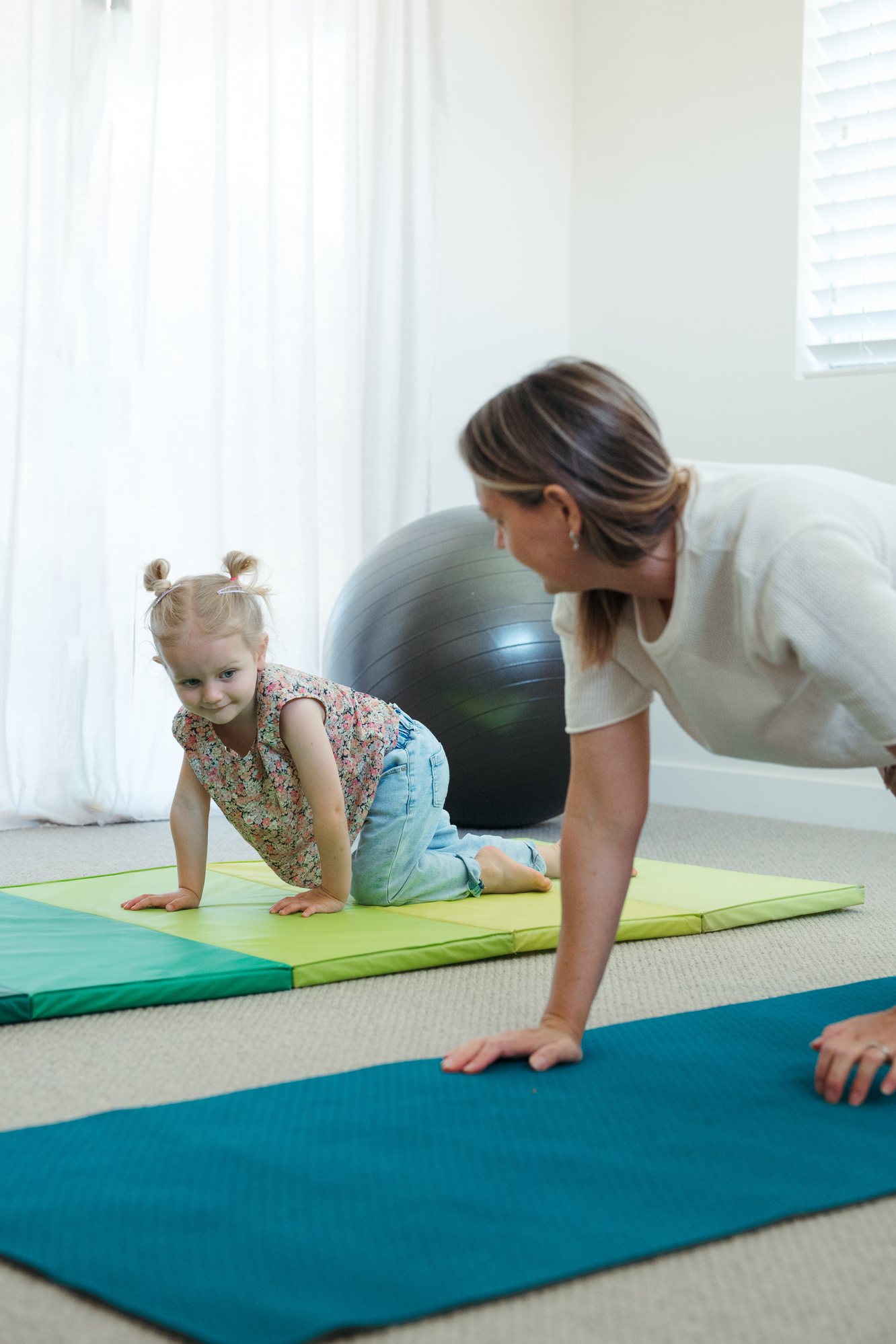
    Sitting together on the mats in a session.

    How I help children calm their nervous system

    I teach children how to use their breath to help calm and regulate their nervous system. Through breathing exercises and rhythmic movements, we support the connection between the brain and body, helping children develop greater awareness of their physical sensations and emotions.

    As children become more aware of how their bodies feel when they are excited, frustrated or overwhelmed, they can begin to recognise these changes and learn strategies to help them feel calmer and more in control. Over time, these skills can help children respond more effectively to their environment and navigate everyday challenges.

    Michele Henrick, Brain Gym® Consultant in Perth

    “I teach children how to use their breath to help calm and regulate their nervous system.”

    Michele Henrick, Embody Family Wellness

    What one parent noticed

    Before

    Focusing on activities and emotional regulation

    After, in a parent’s words

    “… my cousin is in town, we last seen him in September, he cannot believe how calm and focused [she] has become. … we went Christmas shopping and returned home to wrap, write name cards and put the gifts under the tree. [She] was able to complete the whole task which took about 2 hours!!!”

    A parent, in a message to Michele

    When your child is often overwhelmed

    Here are some signs a parent might notice that their child’s nervous system is overwhelmed:

    Struggling with emotions

    Becoming easily frustrated, having frequent meltdowns or finding it difficult to calm down after becoming upset.

    Finding it hard to concentrate

    Becoming distracted easily, struggling to follow instructions or finding it difficult to sit still.

    Seeking constant movement

    Frequently fidgeting, jumping, spinning or appearing to need movement to feel settled.

    Being sensitive to their surroundings

    Becoming overwhelmed by noise, bright lights, touch or busy environments.

    Struggling with coordination

    Finding activities such as balancing, catching a ball, handwriting or managing everyday tasks more challenging.

    Having difficulty with transitions

    Becoming distressed when changing activities, leaving familiar places or adjusting to unexpected changes.

    Becoming withdrawn or shutting down

    Appearing unusually quiet, disengaged or reluctant to participate when situations feel too demanding.

    When the Moro reflex, the startle reflex, is retained, children can be easily overwhelmed, anxious or sensitive to noise and light.

    Brain Gym® is a series of simple body movements that assists to create new pathways for the situations that cause stress in the brain and body. It can help children, and it can help parents and people working with children to remain calm and think clearly under pressure. You can read more on my Brain Gym® page.

    If you are worried about your child, please check in with your GP too. My work is movement based and sits alongside medical care, not instead of it. You are welcome to get in touch for a free phone chat about what you are noticing.

    Is there research behind it? Yes. Primitive reflex integration exercises are researched for their effect on childhood motor and neurological patterns. See the research.

    Not sure where to start?

    You are welcome to get in touch for a free phone chat about what you are noticing in your child.
  • Animal Walks for Kids: 8 to Try at Home

    Animal Walks for Kids: 8 to Try at Home

    Animal walks are simple movement games where a child moves like an animal: a bear, a crab, a frog. They need no equipment, they use the whole body, and they help build the shoulder and core stability the hands rely on.

    I’m Michele, a Primitive Reflex Integration Practitioner in Perth and a qualified primary school teacher. Here are eight fun animal walks to try. They are good to use for home play.

    Key takeaways

    • Animal walks need no equipment and use the whole body.
    • They use both sides of the body together and help build the shoulder and core stability the hands rely on.
    • Keep them short and playful: a few minutes at a time is plenty.

    8 animal walks to try

    1

    Bear walk

    Hands and feet on the floor, bottom up in the air, and walk forwards.

    2

    Crab walk

    Sit on the floor, put the hands behind, lift the bottom and walk backwards or sideways.

    3

    Frog jumps

    Squat down with hands on the floor, then jump forwards and land back in a squat.

    4

    Bunny hops

    Feet together, small hops forwards. Try hopping along a line on the floor.

    5

    Snake slither

    Lie on the tummy and wriggle forwards using the arms and legs.

    6

    Inchworm

    From standing, walk the hands out along the floor, then walk the feet in to meet them.

    7

    Penguin walk

    Walk on the heels with the toes lifted off the floor.

    8

    Flamingo

    Stand on one leg and count how long you can balance. Then swap legs.

    Michele supporting a child over an exercise ball during a movement session
    Whole-body movement over an exercise ball in one of my sessions.

    Why animal walks are good for children

    • They use the whole body
    • They use both sides of the body together
    • Along with crawling games and climbing, they build the shoulder and core stability the hands rely on
    1. 1Whole bodycrawling, climbing, animal walks
    2. 2Core and shouldersa steady base
    3. 3Armsreaching and pushing
    4. 4Hands and fingersholding, cutting, writing
    Big movements before small ones: whole-body play builds the shoulder and core stability the hands rely on.

    Tips for making them fun

    • Turn them into a game: races down the hallway, follow the leader, or an obstacle course
    • Keep it short. A few minutes at a time is plenty
    • Go barefoot, and try different surfaces: grass, sand, carpet
    • Keep it playful, and stop if anything hurts
    Child stepping across balance pods with Michele
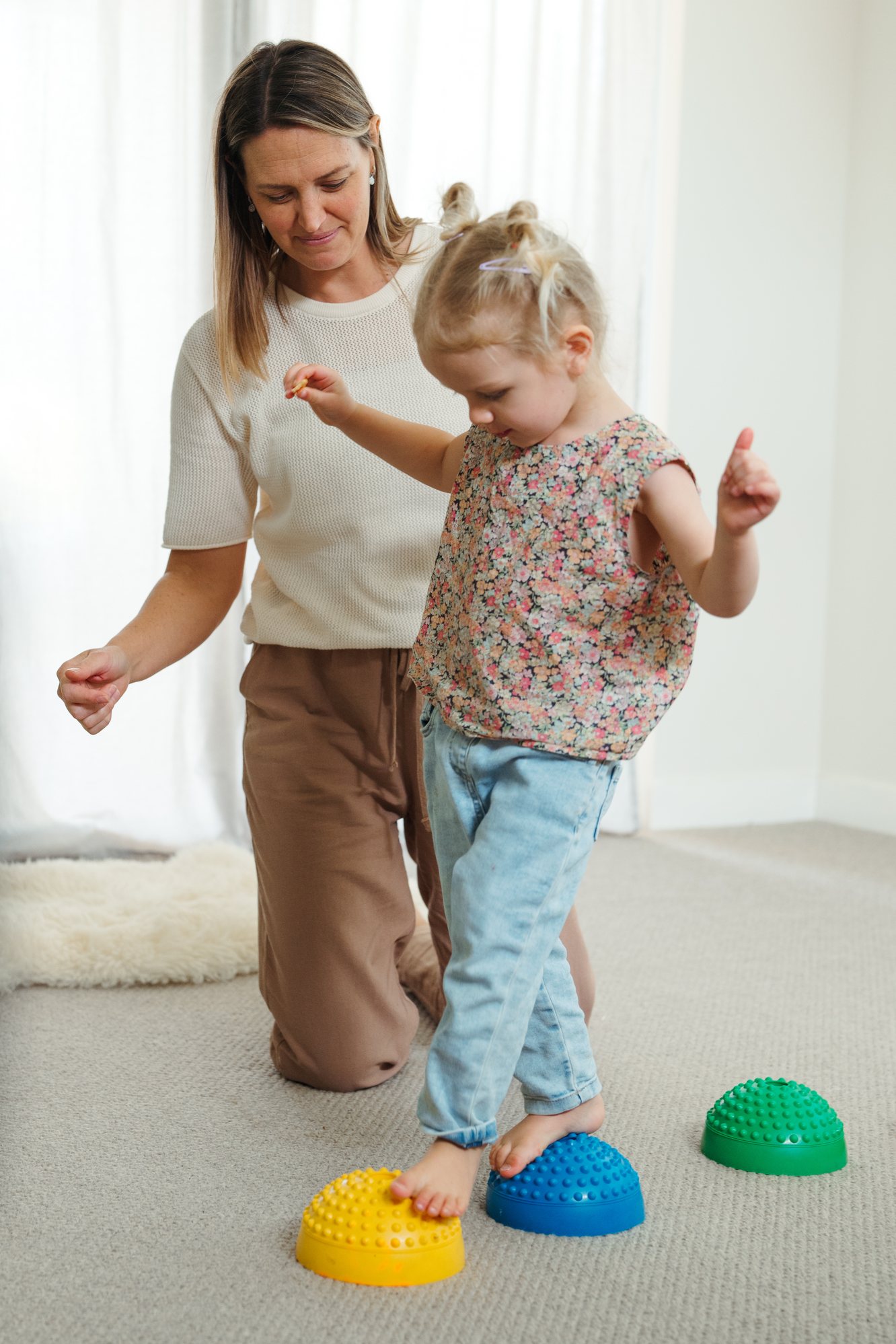
    Balance play on stepping pods, a cousin of the flamingo.

    When to look a little further

    Children all move differently, and some of these will be harder than others. If your child finds most of them very hard, and you are also noticing things like poor balance, toe walking, W sitting or messy handwriting, it can be worth looking at whether retained primitive reflexes are part of the picture.

    You can read how I work on my services page, or get in touch for a free phone chat about what you are noticing in your child.

    What parents say

    ★★★★★ 5.0 from 3 Google reviews.

    ★★★★★

    “We visited Michele for our 4yo little girl who struggled to stay on task, sit still, lacked coordination and struggled with separation. … By week 3 we had visitors comment on the changes to our household. By week 12 we had a completely different little girl, shes relaxed. She still has her beautiful spark, amazing imagination and sense of humour, life is just slower now.”

    Sarah Anderson, Google review

    ★★★★★

    “From the very first session, she created such a calm, supportive, and understanding space … The strategies and tools we’ve learned have made a real impact on his ability to regulate, connect, and thrive both at home and school.”

    Natasha Weir, Google review

    ★★★★★

    “Michele identified some unintegrated reflexes and gave us some simple, easy to do at home exercises … From the first session we saw less reactivity; and from consistently doing the exercises at home my daughter can now remain calm in situations that would previously have caused a lot of distress.”

    Analise Mongan, Google review

    Not sure where to start?

    You are welcome to get in touch for a free phone chat about what you are noticing in your child.

  • Movement Breaks for Kids: 12 Brain Break Ideas for Home and Homework

    Movement Breaks for Kids: 12 Brain Break Ideas for Home and Homework

    A movement break, often called a brain break, is a short burst of movement between stretches of sitting. For many children it works better than being told to sit still, because the body gets the movement it is asking for and can then settle again.

    I’m Michele, a Primitive Reflex Integration Practitioner in Perth and a qualified primary school teacher. I suggest movement breaks during homework, rather than asking for long stretches of sitting still. Here are 12 simple ones to try at home.

    Key takeaways

    • A movement break, or brain break, is a short burst of movement between stretches of sitting.
    • A few minutes of movement gives the body a reset, so there is more left for listening, reading and writing.
    • Keep breaks short, offer one before your child gets restless, and let them choose.

    Why brain breaks help

    For some children, sitting still takes real effort. Their body is working hard just to stay upright and steady, and that effort has to come from somewhere. A few minutes of movement gives the body a reset, so there is more left over for listening, reading and writing.

    The brain break loopSittingand workingBody getsrestlessShort burstof movementSettlesagain
    A brain break gives the body the movement it is asking for, so it can settle again.

    12 brain breaks to try

    Whole body

    • Animal walks such as bear walks and crab walks
    • Crawling through a tunnel, or under a row of chairs
    • “Snow angels” on the carpet
    • Rolling across the room and back

    Both sides together

    • Touching a hand to the opposite knee, ten times each side
    • Marching on the spot to music
    • Rolling or throwing a ball so your child has to reach across their body to get it

    Balance

    • Stepping stones made from cushions
    • One-leg games: who can balance the longest?
    • Heel walking across the room

    Strong and steady

    • Rocking gently forwards and backwards on hands and knees
    • Lying on the tummy to read or draw for a few minutes
    Child stepping across balance pods with Michele
    Stepping stones and balance play in one of my sessions.

    How to make movement breaks work

    Tips that help

    • Keep them short, and offer one before your child gets restless rather than after
    • Let your child pick from two or three choices
    • Keep it light. Nagging tends to make sitting a battle
    • Finish with something calm, like a drink of water, before going back to the task

    When a child still cannot settle

    If your child finds it hard to sit still even with regular movement, and you are also noticing things like W sitting, slumped posture or messy handwriting, it can be worth looking at whether retained primitive reflexes are part of the picture. The STNR in particular is often linked with slumped posture and difficulty sitting still at a desk.

    If sitting still is getting in the way at school, talk to your child’s teacher as well. You can read how I work on my services page, or get in touch for a free phone chat.

    Michele and a young child sitting on mats in a movement session
    Sitting together on the mats in a session.

    Not sure where to start?

    You are welcome to get in touch for a free phone chat about what you are noticing in your child.

  • Why Play Matters for Your Child’s Developing Brain

    Why Play Matters for Your Child’s Developing Brain

    Play is how young children learn. For little ones, the process is far more important than the product: the exploring, the mess and the trying matter more than what they make at the end.

    I’m Michele, a Primitive Reflex Integration Practitioner and Brain Gym® Consultant in Perth, a qualified primary school teacher and a mum of three. Here is why play matters so much in the early years, and some simple ways to make the most of it at home.

    Key takeaways

    • Play is how young children learn: the process matters more than the product.
    • Movement play builds postural control, coordination, balance and body awareness.
    • Naming feelings and singing instructions are simple ways to help through the day.

    What is happening in the brain in the early years

    The brain has two sides. The right side is the creative, imaginative side, where empathy and intuition are favoured. The left side looks after language, numeracy, literacy, analysis, logic, planning and time.

    The two sides also develop at different times. Between 0 and 3 years, the right side is the lead, or dominant, side. Then from 3 to 6 years, the left side goes through a significant growth period, as described in this child development text on brain development.

    Young children often do what feels good right there and then, and cannot always explain why. Movement plays an important role too, in developing postural control, coordination, balance and body awareness. Having integrated reflexes is the first step in a child’s overall development.

    1. Play, learning and school
    2. Postural control, coordination, balance and body awarenessbuilt through movement
    3. Integrated reflexesthe first step
    Having integrated reflexes is the first step in a child’s overall development, and movement builds on it.

    Learning through play: why the process matters more than the product

    1

    Give them lots of play

    2

    Allow time to explore

    3

    Don’t focus on outcomes or long-term consequences

    Movement play that builds the foundations

    These are simple things to try at home:

    1

    Crawling games: tunnels, obstacle courses and chasing on hands and knees

    2

    Animal walks such as bear walks and crab walks

    3

    Plenty of time at the playground: climbing, swinging, hanging and balancing

    4

    Play that builds hand strength: playdough, pegs, tongs, threading and building blocks

    5

    Lying on the tummy to read, draw or do puzzles

    6

    Balance play: stepping stones, low beams and one-leg games

    For older children doing homework, movement breaks work on the same idea.

    Michele and a toddler doing floor exercises on play mats
    Floor play on the mats in one of my sessions.

    Exercises from my sessions to keep going at home

    Some of the exercises we practise together in my sessions are easy to keep going at home:

    1

    Cross crawl, or lizard crawl

    2

    Lazy 8 eye exercises

    3

    Calming, rhythmic movements at bedtime

    Name their feelings

    Label and acknowledge your child’s feelings. Giving them the words builds pathways for the left side of the brain, the side that looks after language.

    Sing it to them

    Words are processed in the left side of the brain, while tune and melody are processed in the right. A rewarding time to use this is during routine activities. If you have asked them to put their shoes on two or three times and they are not listening, sing it to them. It helps them tune in, and it brings more joy to the moment for you too.

    Michele Henrick, Brain Gym® Consultant in Perth

    “If you’ve asked them to put their shoes on 2 or 3 times and they’re not listening, sing it to them.”

    Michele Henrick, Embody Family Wellness

    Signs it is worth a closer look

    Finding it hard to sit on the mat, or slumping and wriggling at a table

    W sitting, or tiring quickly when sitting

    A very tight or awkward pencil grip, or avoiding drawing and colouring

    Poor balance, tripping or seeming clumsy

    Being easily overwhelmed by noise or busy places

    Seeing one or two of these does not mean something is wrong, and children develop at different rates. If several sound familiar, my school readiness and movement page explains what to look for, and an assessment can show whether retained primitive reflexes are part of the picture.

    I work with babies from birth (preventative exercises up to 2.5 years) and children from 2.5 to 15 years. Parents usually come to me once their child has started full-time school, as that is when the struggles become more apparent, but before 5 is ideal because it is more preventative and prepares children for school. You are welcome to get in touch for a free phone chat about what you are noticing in your child.

    Is there research behind it? Yes. Primitive reflex integration exercises are researched for their effect on childhood motor and neurological patterns. See the research.

    A baby lying on a mat reaching up for a small ball
    Reaching for a ball in a baby session.

    Not sure where to start?

    You are welcome to get in touch for a free phone chat about what you are noticing in your child.