Author: Michele Henrick

  • Balancing the Good and the Bad

    Balancing the Good and the Bad

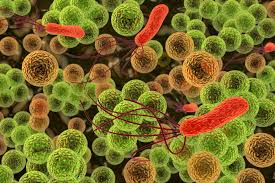
    Your body needs a balance of good and bad bacteria to function optimally. If there is too much bad bacteria, illness and disease can set in.

    Some facts about the digestive system:

    • We are all walking ecosystems made up of microbiomes (small communities on microbes), collections of good and bad bacteria all over our body.
    • If you could remove all of the bacteria in one person’s digestive system, the whole lot would probably weigh about 1 kg.
    • During the process of child birth a baby takes in its mothers good and bad bacteria. See this link for a general understanding: http://www.wired.com/2014/04/missing-microbes-antibiotic-resistance-birth/ For a US research paper on the topic: http://www.ncbi.nlm.nih.gov/pmc/articles/PMC3110651/
    • The small intestine is where most digestion and nutrient absorption takes place. A balance of good and bad bacteria is required to help this function.
    • Due to alcohol, highly processed foods, antibiotics and other medications or toxins, good bacteria can be replaced with bad bacteria.
    • Bad bacteria over growth can spread from the large intestine up to the small intestine causing symptoms of IBS as the bacteria responds differently to different foods for example starchy / non starchy foods. This is called SIBO – Small Intestinal Bacteria Overgrowth.

    With the assistance of a naturopath, Finlay and I followed the FODMAP diet in order to have our systems rebalanced. We both had the addition of some supplements / natural remedies, as well as the correct selection of probiotics. There are many strains of probiotics out there and it is important that the right one is used for these circumstances.

    So what is the FODMAP diet? FODMAP stands for Fermentable, Oligosaccharides, Disaccharides, Monosaccharides and Polyols, these are molecules found in the food we eat. These molecules can be poorly absorbed by some people. For example some foods can cause water retention – slowing things down in the digestive system. Then other foods can cause the water to be drawn out and expelled – speeding things up. These symptoms are similar to that of Irritable Bowel Syndrome (IBS) which is why the FODMAPs diet is also used to treat IBS.

    There is an initial stage of six weeks where the diet is quite strict, followed by another six weeks with more additions to the diet and increased amounts of the ‘allowed’ vegetables. Following the diet meant another major shift to our diet, taking out foods that are high in FODMAPs. There was a limit or total ban on vegetables that I had become confident in cooking, like cauliflower, onions, peas (Finlays most favourite food in the world at the time) and pumpkin (my favourite). I had to learn about preparing, cooking and including vegetables like bok choy, silver beet and radishes into our diets?!?! On a positive, I now have a much wider range of variety and a healthy balance of different vegetables as well as other foods.

    After the diet was finished we continued with the natural remedies and probiotics. I could honestly say and feel that we were clearing through the path of healing. It is such a good feeling when you know that your body is working as it should be!

    See this link for some examples of foods from the FODMAPs Diet: https://www.monashfodmap.com/about-fodmap-and-ibs/high-and-low-fodmap-foods/

    And for healthy individuals: high fibre, high prebiotic food diet (to promote the growth of good bacteria): https://www.monash.edu/medicine/translational/gastroenterology/prebiotic
  • Simple Chicken Bone Broth Recipe

    Simple Chicken Bone Broth Recipe

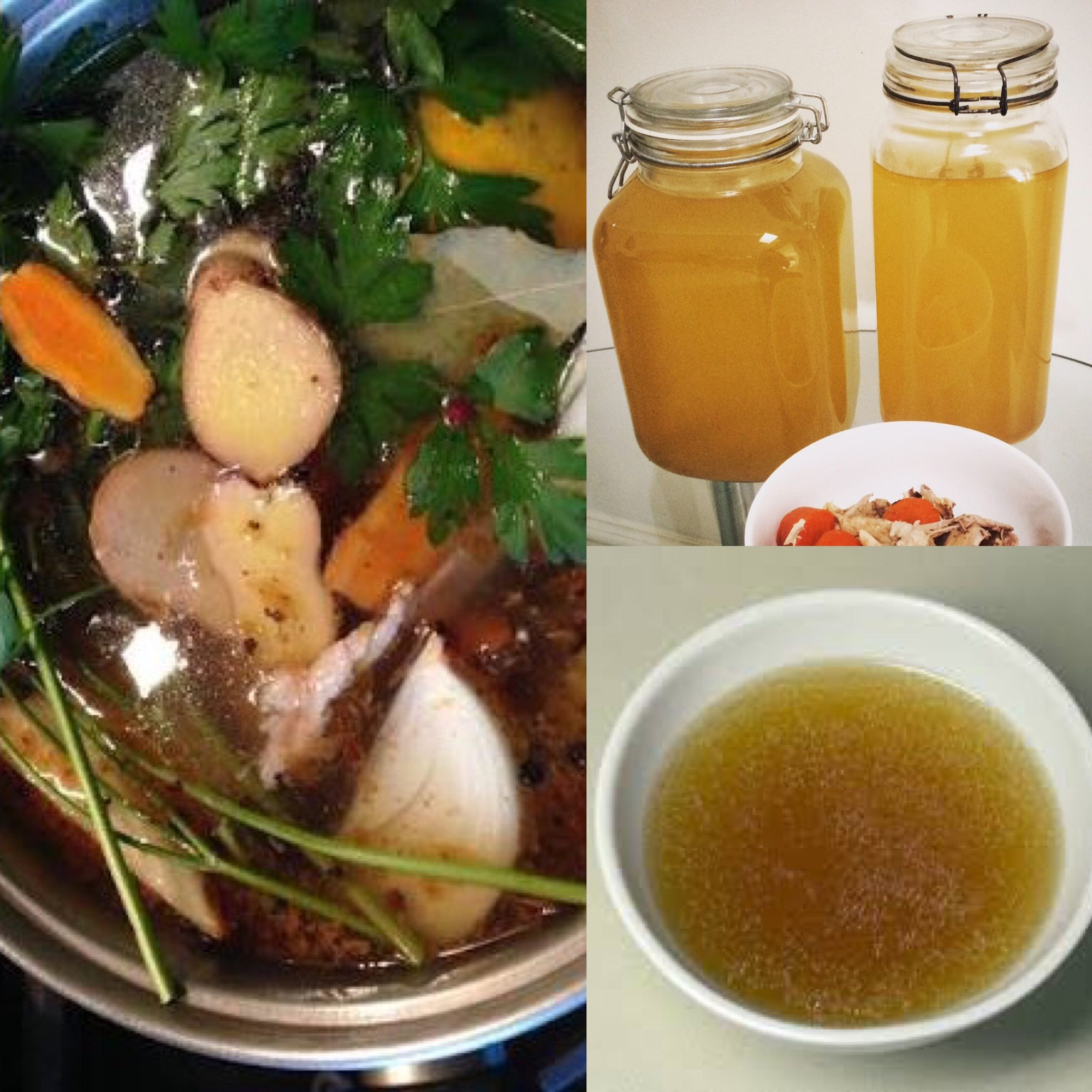
    I had a couple of requests for a bone broth recipe, so here’s what I use. I do this weekly so try to keep it as easy as possible.

    • 2 or 3 free range chicken carcases
    • 1 large onion quartered
    • 2 garlic cloves
    • 1 tablespoon of rock sea salt or Himalayan rock salt
    • 1 bay leaf
    • 2 tablespoons of apple cider vinegar, or other vinegar (acidic nature draws minerals out of chicken bones)
    • 3 or 4 carrots cut into chunks
    • 2 sticks of celery cut into chunks
    • 5 or so sprigs of parsley (added in final 10 minutes increases calcium content)

    Put all the ingredients (except parsley) in a large pot and fill with filtered water. Bring to a slow boil and then reduce to lowest temperature. ‘Scum’ will rise to the top, scoop this out. Then it’s all good to be left over night (can do it for up to 24 hours if you wish). In the morning add the parsley 10 minutes before turning it off. Once cooled pour and store into large glass jars with a decent seal so broth stays fresh for the week. I’ve broken so many glass jars because I don’t wait for it to cool enough! A layer of fat will develop on the top when refrigerated, it is okay to include this when reheating (wouldn’t recommend it if you don’t use free range chicken though as the toxins are stored in the fat).

    Note: You can be flexible with the types and amounts of vegetables and herbs you use, these amounts seem to be the best flavour for us. You can also use a whole chicken instead and then pick the meat off for an easy meal.

    Heat up, sip and enjoy 🙂

  • Healing with the GAPS Diet

    Healing with the GAPS Diet

    HEALING WITH THE GAPS DIET

    The biggest improvement in my sons digestive health came from doing the GAPS diet and adding chicken bone broth regularly to our daily routine.

    After reading a valuable book ‘Nourishing Your Child for Health and Happiness’ by Sally Gray, a Naturopath (amongst other qualifications) and discovering she lives here in WA, I made an appointment to see her. The GAPS diet had starting popping up on my radar and this is what Sally recommended for Finlay and I.

    GAPS stands for Gut and Psychology Syndrome, it is a diet created by Dr Natasha Campbell-McBride. GAPS works on an understanding that there is a link between the digestive system, the brain and immune system.

    Three part program

    1. Heal the gut lining
    2. Restore the gut with beneficial flora
    3. Relieve the body of an excess toxic load.

    All meals required cooking and there was a lot of preparation, 2 things I was only just learning to do! It required the most work but we got the best results from it. Over the time we were able to introduce a lot of foods that were previously not tolerated. This saw Finlay eating all fruits and vegetables, all meats, seeds, nuts, eggs and occasional cheese or yoghurt. The only foods we were totally excluding after doing GAPS were grains and white potatoes (as this is recommended). I would highly recommend the diet and we have done it again since the first time we did it.

    A note on healing: If you imagine a large meal that is raw, has grains (especially gluten loaded), dairy or full of toxins, the body has to spend all its energy breaking that meal down. If there are any parts of the body that need healing, the body is not able to work on repairing itself (which is what it is designed to do). Yes, I mentioned raw just then, which you may be thinking is a good thing. I am definitely an advocate for raw foods as cooking at high temperatures especially in water, destroys some of the vital nutrients and minerals. However, through the process of cooking, fibre is reduced and makes it much easier for the body to digest. GAPS isn’t all about cooked foods but for the introductory phase it certainly is and this short term ‘break’ on your body certainly has its advantages for repairing.

    This same theory can be applied to pregnancy, labour and the weeks after child birth. The body needs to be able to focus its energy on making a baby, preparing the body and repairing the body, not to mention the energy demands of breastfeeding. If you are loading your body with foods and beverages that are harder for the body to digest it takes energy away from the baby. As I’m heading into the final weeks of my pregnancy and preparing for the massive job of labour and breastfeeding, I’m avoiding unnecessary toxins, sugars, gluten and dairy (apart from butter and occasional cheese) all to make this process easier on my body.

    For more information on the GAPS diet head to: https://gapsaustralia.com.au/