
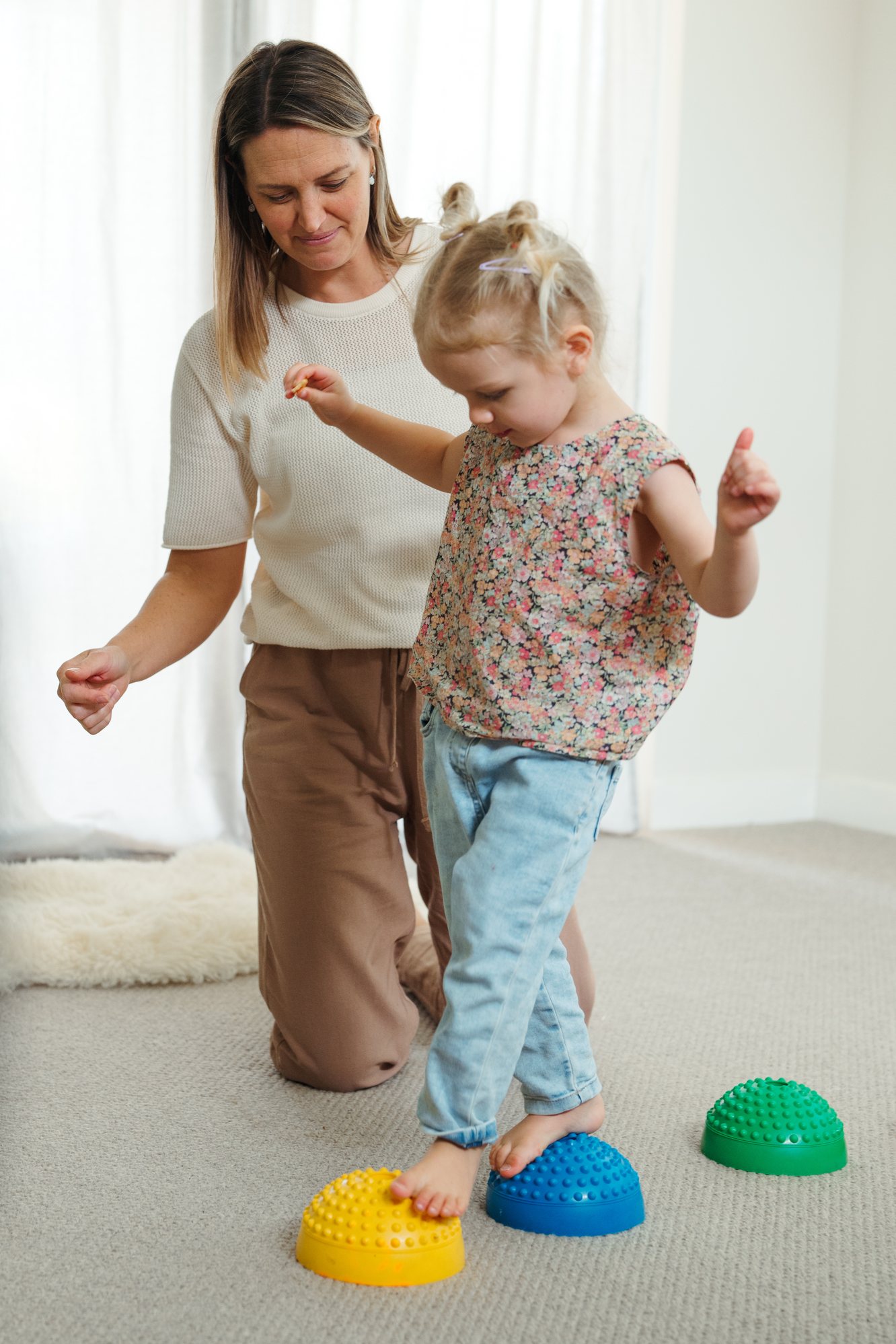
Gross motor skills are the big movements that use the large muscles of the body: crawling, walking, running, jumping, climbing, balancing, throwing and catching. They rely on the brain and body communicating well, knowing where the body is in space, keeping it steady, and using both sides together.
I’m Michele, a Primitive Reflex Integration Practitioner and Brain Gym® Consultant in Perth, and a qualified primary school teacher. This post explains what gross motor skills are, why they matter for school, and simple play ideas to build them at home.
Key takeaways
- Gross motor skills are the big, whole-body movements: crawling, running, jumping, climbing, balancing, throwing and catching.
- Big movements come before small ones: they build the core and shoulder stability the hands rely on.
- Playground time, crawling games, animal walks and balance play all help, short and often.
- If falls or coordination get in the way of school and play, check in with your GP or paediatrician.
Gross motor skills and fine motor skills
Gross motor skills are the big movements of the whole body. Fine motor skills are the small, controlled movements of the hands and fingers, like holding a pencil, using scissors or doing up buttons. The two are linked: big movements before small ones, because crawling, climbing and animal walks build the shoulder and core stability the hands rely on.
- Crawling and walking
- Running and jumping
- Climbing and balancing
- Throwing and catching
- Holding a pencil
- Using scissors
- Doing up buttons
- 1Whole bodycrawling, climbing, animal walks
- 2Core and shouldersa steady base
- 3Armsreaching and pushing
- 4Hands and fingersholding, cutting, writing
Why gross motor skills matter for school
Gross motor skills underpin a child’s ability to sit in a classroom, core muscle strength supports their endurance and focus, and fine motor skills let them hold a pencil and cut with scissors. You can read more on my school readiness page.

Signs a child is finding gross motor skills hard
Tripping, falling or bumping into furniture and other children
Finding gross motor skills hard to learn, like riding a bike, skipping, hopping or catching a ball
Avoiding sport, climbing or playground games
Poor posture or low muscle tone, and tiring quickly
Seeing one or two of these does not mean something is wrong, and children develop at different rates.
- 18 monthsWalks without holding on to anyone or anything
Climbs on and off a couch or chair without help - 2 yearsKicks a ball
Runs
Walks (not climbs) up a few stairs with or without help - 4 yearsCatches a large ball most of the time
- 5 yearsHops on one foot
Gross motor activities to try at home
1
Plenty of time at the playground: climbing, swinging, hanging and balancing
2
Crawling games: tunnels, obstacle courses and chasing on hands and knees
3
Animal walks such as bear walks, crab walks and frog jumps
4
Balance play: stepping stones, walking along a line or a low beam, or standing on one leg while brushing teeth
5
Ball games at an easy level, starting with a big, soft ball or a balloon
6
Swimming, and riding a scooter or balance bike
Keep it fun and low pressure. Short and often works better than long practice sessions, and movement breaks through the day all add up.

Where primitive reflexes fit in
In my work I often see balance and coordination difficulties alongside retained primitive reflexes, the automatic movements babies are born with. When a reflex has not fully integrated, the body keeps reacting automatically in situations where a child needs calm, controlled movement. You can read more on my coordination, balance and clumsiness page.
When it is worth getting checked
If your child is falling a lot, has lost skills they used to have, or their coordination is getting in the way of school and play, please check in with your GP or paediatrician. My work is movement based and sits alongside medical care, not instead of it.
You can read how I work on my services page, or get in touch for a free phone chat about what you are noticing in your child.

“Working with children before 5 is ideal because it is more preventative and prepares children for full-time school.”
Michele Henrick, Embody Family Wellness
Common questions
What are examples of gross motor skills?
Crawling, walking, running, jumping, hopping, skipping, climbing, balancing, throwing, catching and riding a bike or scooter.
What age do you work with?
Children of all ages from 2.5 years, and preventative exercises for babies from birth up to 2.5 years.
Can my child see you alongside other professionals?
Yes. My work is movement based and looks at the whole brain and body connection, and many families see me alongside other professionals.
What parents say
★★★★★ 5.0 from 3 Google reviews.
★★★★★
“We visited Michele for our 4yo little girl who struggled to stay on task, sit still, lacked coordination and struggled with separation. … By week 3 we had visitors comment on the changes to our household. By week 12 we had a completely different little girl, shes relaxed. She still has her beautiful spark, amazing imagination and sense of humour, life is just slower now.”
Sarah Anderson, Google review
Not sure where to start?
You are welcome to get in touch for a free phone chat about what you are noticing in your child.


