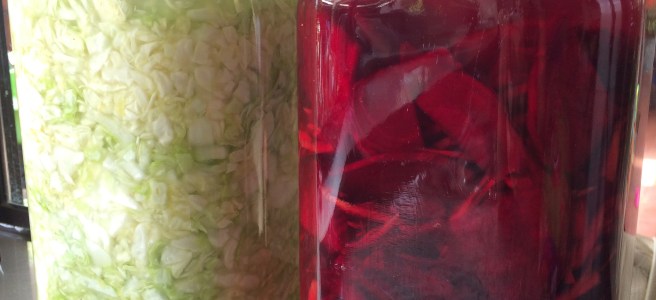
Our top three game changers have been chicken broth, fermented veggies and ghee. Game changers because of the health benefits we received from including them in our diet and also for their tastiness! Today I’m talking about fermented veggies.
Information and recipes are from Sally Fallons ‘Nourishing traditions’.
The process of fermented vegetables and fruits, has been around forever. It is how our ancestors preserved foods to have them available all year round without the use of freezers or canning machines. Lactobacilli (lactic acid producing bacteria) are found on the surface of all living things, especially on leaves and roots of plants growing near the ground. Through preserving / fermenting, lactobacilli multiplies. This enhances digestibility and increases vitamin levels, enzymes, antibiotic and anti-carcinogenic substances.
If you are taking a probiotic that is great but the added bonus of fermented vegetables is that they travel further down the digestive system (unlike the powder substance of a probiotic which is absorbed earlier in the digestive tract).
So I hope I have convinced you to give fermented veggies a try! Fermented veggies are great to add to your plate when eating meat (to aid in digestion of the meat). Do not heat fermented veggies otherwise it will destroy all the good bacteria.
Below are 2 recipes that I use. The recipes call for whey- whey is the watery liquid at the top of your yogurt- if you are going to use this, make sure it is strained so it is just the liquid and there are no the milk solids). If this isn’t available you can use an additional tablespoon of sea salt. I use real deal sea salt for this- ‘Salt of the Earth, Hand Harvested Coarse Celtic Sea Salt). It is not beautiful and white but it hasn’t been processed at all…
Sauerkraut
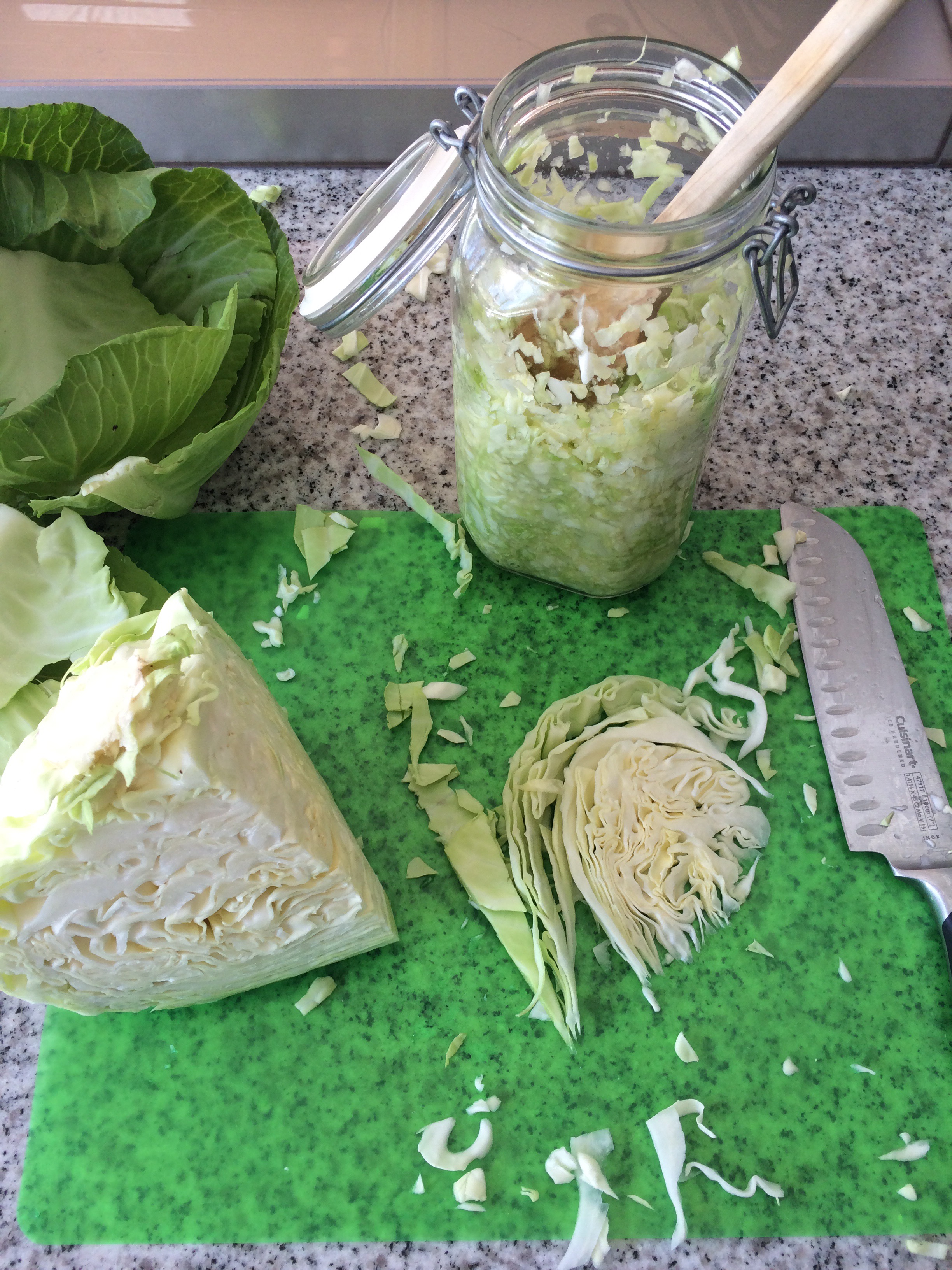
- 1 medium cabbage, cored & shredded
- 1 tablespoon on sea salt
- 4 tablespoons of whey (or additional tablespoon of sea salt).
Add all ingredients to a bowl, mix and then pound with a wooden pounder for 10 minutes to release the juices. I have found adding the cabbage straight into the mason jar a bit at a time and then pounding makes it easier, again you just add more cabbage when the juices start to be released.
Cover tightly. If there is room in the jar the air will turn the top part brown so I usually stuff the top with the outer leaves of the cabbage so there is as little air as possible. Then you can leave it on the bench for 3 days (or longer during winter). Gas can build up in the process so once or twice open the top to let the gas out, before transferring it into the fridge.
Beet Kvass
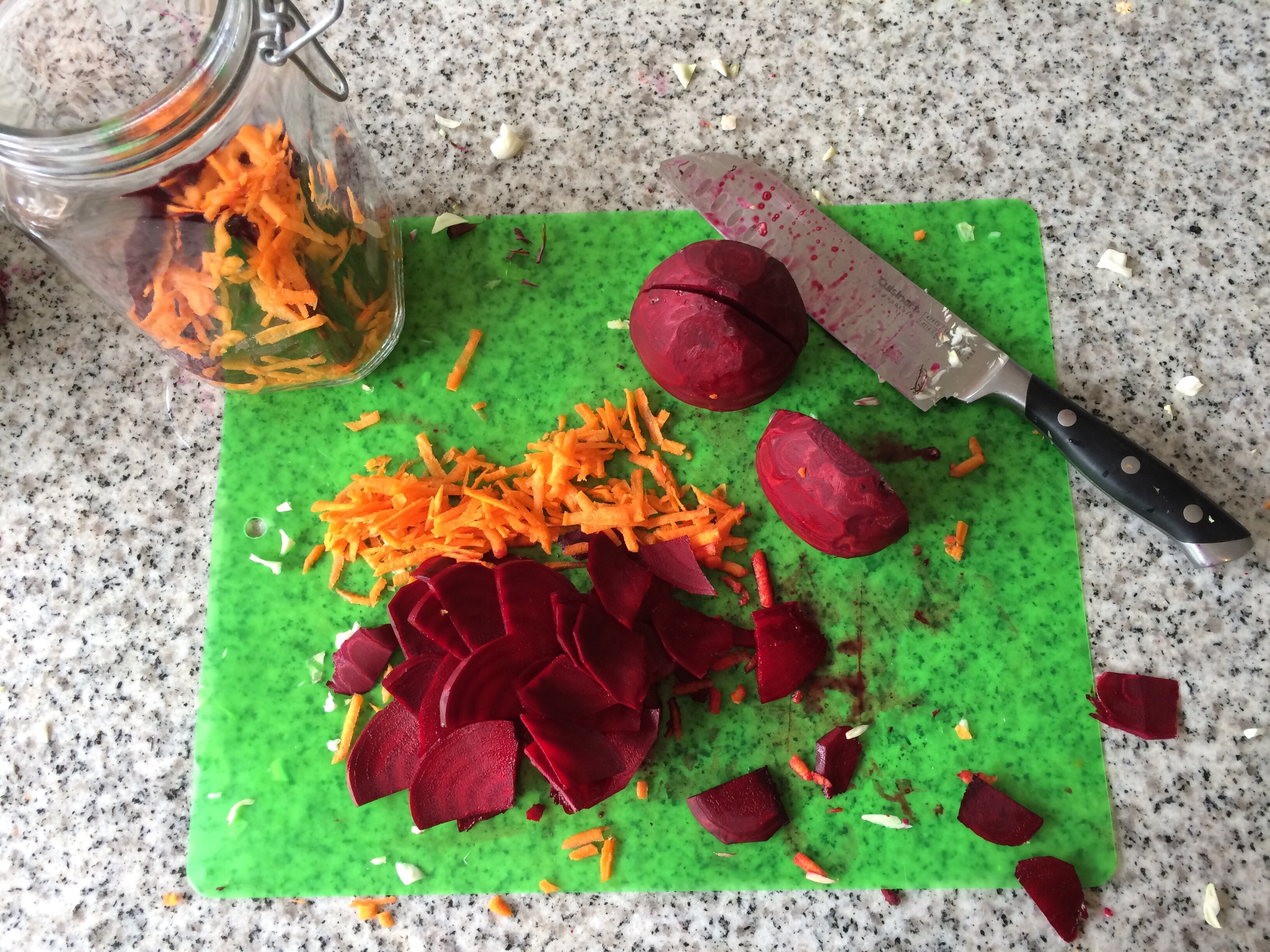
- 12 medium beets
- Seeds from cardamom pods (optional)
- 1 tablespoon of sea salt
- 4 tablespoons of whey (or additional tablespoon of sea salt)
- 1 cup of filtered water
Peel and cut beets into julienne strips or use the cheese slicer on a grater, (do not grate the beets though as this releases too much juice and will produce alcohol rather than lactic acid). Place beets in mason jar and push down slightly with wooden pounder. Combine remaining ingredients and pour over beets. The top of the beets should be at least 1 inch below the top of the jar. Cover tightly, leave on the bench for 3 days (or longer in winter) before transferring to the fridge. (Above picture includes grated carrot as an extra).
Both of these recipes require practise (did for me anyway)… The beets can produce a scum on the top, I scoop this out or wipe with paper towel daily. Generally ferments are pretty hardy and forgiving. That being said, I do stick to these easy, safe options but there are so many other varieties out there. So if you are more adventurous with your ferments and try something that works well, please let me know!!
 Embody Family Wellness